
What Does “Automated” Actually Mean?
Is a gangway really automated just because it moves at the push of a button?
True automation involves far more than powered movement. Controls, feedback, interlocks, monitoring, operator interfaces and emergency recovery all influence how effectively an automated access system performs.
This article looks beyond the label to examine what meaningful automation should actually deliver.
Moving Beyond Push-Button Marine Gangways


Introduction
The word “automated” is increasingly used when describing modern marine gangways and accommodation ladders.
But what does automation actually mean?
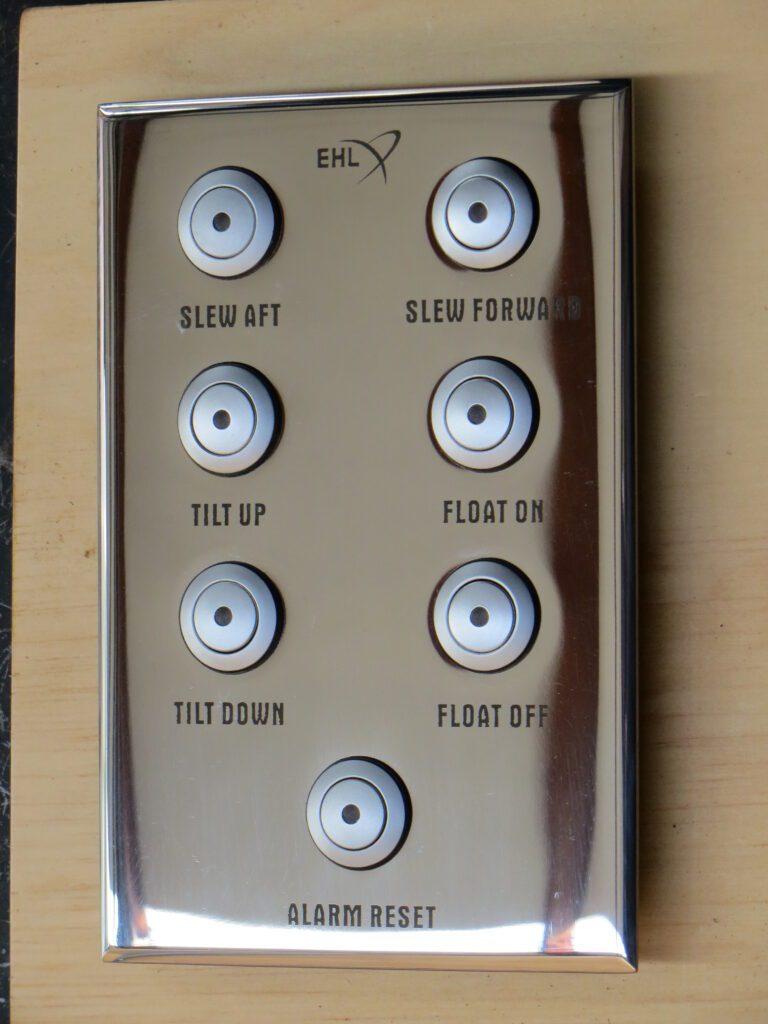
A hydraulic cylinder moving a gangway does not necessarily make it automated. A motorised system is not automatically an automated system. And a remote control alone does not constitute a complete automation strategy.
For vessel owners, naval architects, shipbuilders and operators, the more important question is:
What does the automation actually achieve?
A properly engineered automated marine gangway should do more than move at the press of a button. It should coordinate movement, monitor system conditions, manage operating limits, provide appropriate safety functions and give the operator clear control of the process.
Automation should therefore be viewed as an engineering function, not simply a feature.
Powered Equipment vs Automated Equipment
One of the most important distinctions in marine access engineering is the difference between powered equipment and automated equipment.
A powered gangway may use hydraulic cylinders, electric motors or other actuators to perform physical movement.
Automation goes further.
An automated marine gangway can combine:
- powered actuation
- control logic
- sensors
- position feedback
- operator interfaces
- interlocks
- alarms
- operating limits
- emergency functions
- fault monitoring
- controlled recovery
The system can use information from its sensors and predefined control logic to determine how movement should occur.
In other words:
Powered equipment provides movement.
Automation coordinates movement.
That distinction becomes particularly important as marine access systems become larger, more complex and more integrated with the vessel.
What Does an Automated Marine Gangway Actually Do?
Consider an automated accommodation ladder.
The operator may initiate a deployment sequence, but several functions may need to occur in the correct order.
Depending on the design, an automated sequence could involve:
- system activation
- safety and interlock verification
- handrail deployment
- primary movement
- extension
- position monitoring
- controlled landing
- operating-limit verification
- emergency-stop capability
- fault response
- controlled recovery
- retraction and stowage
The important point is that these functions are not simply a series of mechanical movements.
They are part of a coordinated control system.
The automation needs to understand the state of the equipment and respond appropriately to operator commands and system feedback.
Why Marine Gangway Automation Matters
The purpose of automation should always be linked to a measurable operational benefit.
Depending on the vessel and system configuration, automation can potentially provide:
- reduced manual handling
- reduced crew exposure
- simpler operation
- more consistent deployment
- controlled movement
- reduced physical effort
- improved monitoring
- repeatable operating sequences
- single-operator operation
EHL’s published marine access systems include automated deployment and single-operator operation, depending on the system configuration and application. EHL Group — Naval Accommodation Ladders & Gangway Systems
However, automation should not be introduced simply because it is technically possible.
The correct level of automation depends on the vessel, crew, operating environment and mission.
The Operator Should Remain in Control
Good automation does not mean removing the operator from the process.
It means giving the operator better control with less unnecessary manual intervention.
A well-designed marine gangway control system should provide clear information about:
- system status
- current position
- movement
- operating limits
- faults
- alarms
- emergency conditions
The operator should be able to understand what the system is doing and what will happen when a command is given.
This is particularly important for equipment used in dynamic marine environments, where vessel movement, weather conditions and changing landing positions can influence operation.
Automation should therefore support the operator rather than create uncertainty.
Interlocks Are a Critical Part of Automation
One of the key differences between simple powered equipment and a properly engineered automated system is the use of interlocks.
An interlock can prevent an inappropriate operation from occurring when predefined conditions have not been satisfied.
Depending on the system architecture, interlocks may monitor:
- gangway position
- access-door status
- handrail position
- hydraulic pressure
- limit switches
- emergency-stop status
- system faults
- other vessel or equipment conditions
For example, an automated sequence may be prevented from proceeding if a required component has not reached its expected position.
This is where automation becomes more than convenience.
It becomes part of the system’s safety and operational architecture.
The precise control and interlock strategy should always be developed around the particular vessel and application.
Feedback Turns Movement Into Control
An automated marine gangway cannot make informed decisions without reliable feedback.
Sensors and feedback devices can provide information about the physical state of the equipment.
Depending on the system, this may include:
- position
- extension
- rotation
- pressure
- actuator status
- limit positions
- fault conditions
This information can then be used by the control system to determine whether the next stage of an operating sequence should proceed.
Without appropriate feedback, automation can become little more than remote activation of powered equipment.
With appropriate feedback, the system can become a controlled and monitored marine access system.
What Happens When Something Goes Wrong?
A genuinely engineered automated gangway needs to be considered beyond normal operation.
The critical questions are often the uncomfortable ones:
What happens if electrical power is lost?
What happens if hydraulic pressure falls?
What happens if a position sensor fails?
What happens if the control system develops a fault?
What happens if the gangway stops halfway through deployment?
What happens if the operating conditions change unexpectedly?
These questions lead directly into the design of:
- emergency stops
- fault detection
- controlled shutdown
- hydraulic load holding
- manual intervention
- emergency power where appropriate
- recovery procedures
- operator alarms
- safe-state strategies
Automation therefore needs to account for both normal operation and credible failure conditions.
Emergency Recovery Is Part of the Design
A system that stops safely during a fault may still need to be recovered.
For example, if an automated accommodation ladder is partially deployed when power is lost, the engineering question becomes:
How can the system be safely managed from that condition?
The answer will depend on the vessel, gangway geometry, actuation system and operational requirements.
Possible approaches can include engineered manual recovery, alternative hydraulic operation, emergency power or other recovery arrangements.
The important point is that recovery should not be an afterthought.
The failure state is part of the system design.
Single-Operator Operation Requires More Than a Remote Control
Single-operator operation can provide significant practical benefits on vessels where crew resources are limited or where access equipment needs to be deployed efficiently.
However, single-operator operation places additional demands on the engineering.
The operator needs to be able to:
- understand system status
- initiate the required sequence
- monitor movement
- identify faults
- respond to alarms
- stop the system when necessary
- understand recovery procedures
This means the human-machine interface becomes an important engineering consideration.
The objective is not simply to reduce the number of people required to operate the equipment.
It is to ensure that the single operator has appropriate visibility and control of the complete process.
Hybrid Marine Gangway Systems
Not every vessel requires the same level of automation.
A hybrid marine access system can provide an alternative approach where different technologies are combined to achieve a specific operational objective.
Depending on the application, a hybrid system may seek to balance:
- automation
- reliability
- energy consumption
- redundancy
- manual recovery
- installation complexity
- maintenance requirements
- vessel infrastructure
EHL has developed and presented automated and hybrid accommodation ladder systems for modern vessel applications, including systems showcased to the maritime industry at Asia Pacific Maritime 2026. EHL Group — Advanced Marine Access Solutions at APM 2026
The value of a hybrid approach is not that it uses more technology.
It is that the technology is selected to suit the actual operational requirement.
Automation Should Be Designed Around the Mission
A naval vessel may require a different automation strategy from a commercial vessel.
An offshore vessel may have different environmental and operational requirements from a superyacht.
A shore-based marine access system may have completely different requirements again.
This means there is no universal definition of the “best automated gangway.”
The appropriate question is:
What level of automation provides the safest, most reliable and most effective operation for this vessel?
That question brings the focus back to engineering.
The right system may be highly automated.
It may be partially automated.
It may use hydraulic, electrical or hybrid actuation.
The correct solution is determined by the operational requirement rather than the technology label.
Automation and Lifecycle Support
Automation also changes the lifecycle requirements of a marine gangway.
More sensors, controls and electronic components can provide greater functionality, but they also introduce additional maintenance and potential points of failure.
Lifecycle engineering should therefore consider:
- component accessibility
- diagnostics
- sensor replacement
- control-system maintenance
- software and configuration management
- spare parts
- documentation
- fault finding
- future upgrades
- component obsolescence
A sophisticated system is only valuable if it can be maintained and supported throughout its service life.
This is why automation needs to be considered as part of the complete marine access system, rather than added as a feature at the end of the design process.
The Difference Between Automation and Marketing
“Automated” can be an attractive word in a product specification.
But the real measure of automation is not how many buttons, sensors or motors a system contains.
It is what the system actually achieves.
A properly engineered automated marine gangway should provide:
Controlled movement
Reliable feedback
Appropriate interlocks
Clear operator information
Defined fault responses
Emergency recovery
Repeatable operation
Lifecycle maintainability
That is automation with a purpose.

The EHL Approach
At EHL Group, marine access systems are engineered around the vessel, its operating environment and its mission.
This can encompass mechanical engineering, hydraulic systems, electrical controls, automation, structural integration, fabrication, installation, commissioning and ongoing lifecycle support.
The objective is not to make a gangway appear technologically sophisticated.
The objective is to make the complete system work better for the people and vessel that depend on it.
Conclusion: Automation Should Be an Engineering Outcome
Automation should not be treated as a marketing label.
It should be an engineering outcome.
A genuinely automated marine access system combines actuation, control logic, feedback, interlocks, safety functions, operator interfaces and recovery strategies into one coordinated system.
The result should be more than push-button movement.
It should provide operation that is controlled, predictable, repeatable and appropriate to the vessel’s mission.
Because the question is not:
“Is the gangway automated?”
The better question is:
“What does the automation actually achieve?”
That is where the value of marine access engineering begins.
Ask the Engineer
Have a marine gangway or accommodation ladder requirement that doesn’t fit a standard specification?
EHL Group can work with vessel owners, shipbuilders, naval architects and operators to develop marine access systems around the vessel, its operating environment and its mission.
Engineering the Connection.
Access by Design. Performance by Engineering.
Contact: solutions@ehlsolutions.com
FAQ
What is an automated marine gangway?
An automated marine gangway uses powered actuation and control systems to perform some or all of the deployment, positioning, extension, retraction and stowage functions with reduced manual intervention.
What is the difference between a powered and automated gangway?
A powered gangway uses an actuator, such as a hydraulic cylinder or electric drive, to move the equipment. An automated gangway adds control logic, sensors, interlocks and operator interfaces to coordinate those movements.
What are the benefits of an automated accommodation ladder?
Depending on the application, automation can reduce manual handling, simplify deployment, improve repeatability, reduce operator exposure and allow controlled positioning. The actual benefits depend on the vessel’s operating profile and system design.
What safety features can be incorporated into an automated marine gangway?
Depending on the application, systems can incorporate emergency stops, position sensing, limit switches, pressure monitoring, interlocks, alarms, controlled movement and emergency or manual recovery functions.
What happens if an automated gangway loses power?
The response should be defined during system design. Depending on the configuration, an access system may incorporate emergency power, manual override, alternative hydraulic operation or another controlled recovery method.
Can an automated gangway be operated by one person?
Some systems can be designed for single-operator operation. Whether this is appropriate depends on the vessel, equipment configuration, operational procedures, safety requirements and risk assessment.
Does automation make a marine gangway safer?
Automation can reduce certain manual handling and operational risks, but automation itself does not automatically make equipment safe. Safety depends on the complete engineering design, controls, interlocks, operating procedures, maintenance and operator training.