
Hydraulic Cylinder Refurbishment, Testing, Diagnostics & Hydraulic Servicing: Maximising Reliability Through Technical Excellence
Hydraulic systems are the driving force behind some of New Zealand’s most demanding industries, from mining and construction to manufacturing, agriculture and heavy transport. These systems are relied upon every day to deliver precise, high-force performance in challenging operating conditions. When hydraulic components begin to wear, develop contamination issues or operate outside their intended parameters, equipment performance can quickly deteriorate, leading to unscheduled downtime, reduced productivity and increased operating costs.
Maintaining hydraulic reliability requires more than reactive repairs. It demands a proactive approach that combines expert diagnostics, preventative maintenance, component refurbishment and performance verification. Through professional hydraulic cylinder refurbishment, comprehensive strip-down and rebuild services, advanced flow testing and data logging, and routine hydraulic servicing, organisations can significantly improve equipment reliability while extending the service life of critical assets.
At EHL, our NZ Technical Services team provides end-to-end hydraulic support, helping customers identify issues before they become failures, optimise hydraulic performance and maximise the return on their equipment investment. This article explores the key hydraulic services offered by EHL and how they contribute to safer, more efficient and more reliable operations.
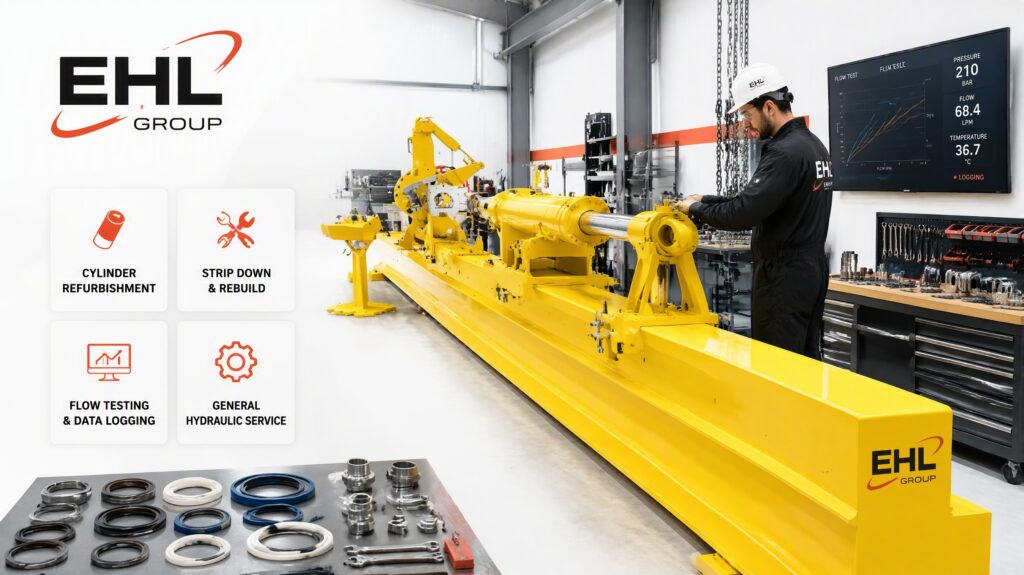
In today’s industrial environment, hydraulic systems are the backbone of critical operations across mining, construction, manufacturing, transport, agriculture and materials handling. When hydraulic equipment underperforms or fails unexpectedly, the resulting downtime can impact productivity, safety and operational costs.
At EHL, our Technical Services team provides comprehensive hydraulic maintenance, diagnostic and refurbishment solutions designed to maximise equipment performance and extend asset life. From hydraulic cylinder refurbishment and complete strip-down and rebuild programs through to advanced flow testing, data logging and general hydraulic servicing, our experienced technicians deliver practical solutions backed by technical expertise.
This article explores the importance of hydraulic servicing and how EHL’s technical capabilities help customers maintain operational reliability.
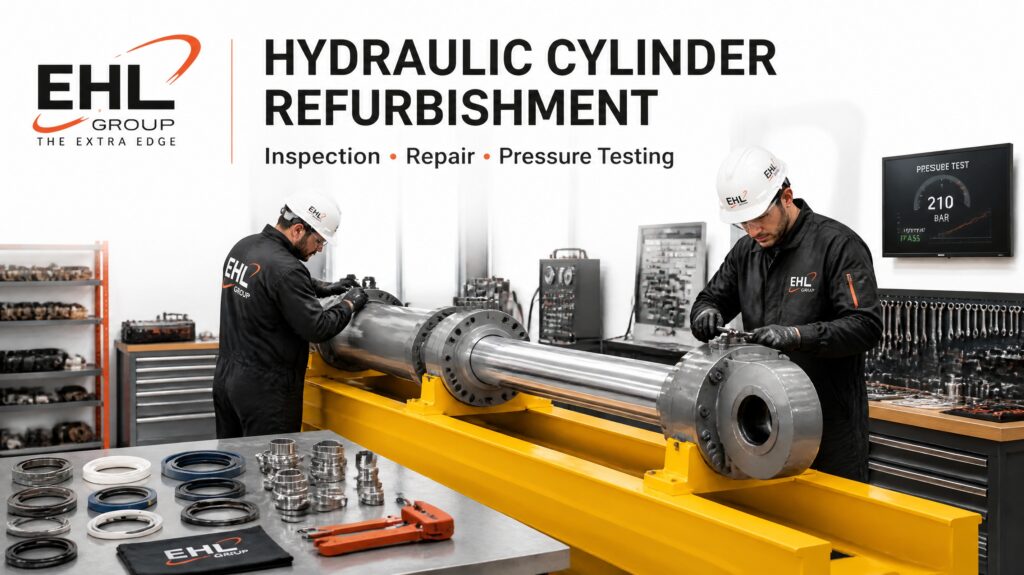
Hydraulic Cylinder Refurbishment
Hydraulic cylinders operate in some of the harshest industrial environments. Continuous exposure to high pressures, contamination, shock loading, corrosion and environmental conditions inevitably leads to wear and degradation.
Rather than replacing expensive hydraulic cylinders prematurely, refurbishment provides a cost-effective strategy that restores performance while significantly extending service life.
What Does Hydraulic Cylinder Refurbishment Involve?
A professional hydraulic cylinder refurbishment process begins with a detailed assessment of the cylinder’s condition. EHL technicians thoroughly inspect all components, identifying wear patterns, contamination issues, mechanical damage and performance concerns.
Typical refurbishment activities include:
- Cylinder disassembly and inspection
- Bore condition assessment
- Rod inspection and straightness testing
- Seal replacement
- Gland and piston inspection
- Surface restoration and repairs
- Rod re-chroming or replacement where required
- Wear ring replacement
- Pressure testing and operational verification
By identifying root causes of failure rather than simply replacing worn parts, EHL helps customers address recurring reliability issues and optimise long-term performance.
Benefits of Refurbishment
A professionally refurbished hydraulic cylinder can provide significant operational advantages:
- Reduced equipment downtime
- Lower replacement costs
- Increased service life
- Improved hydraulic efficiency
- Reduced risk of unplanned failures
- Enhanced safety and reliability
For many applications, refurbishment represents a practical and economically sound alternative to complete component replacement.
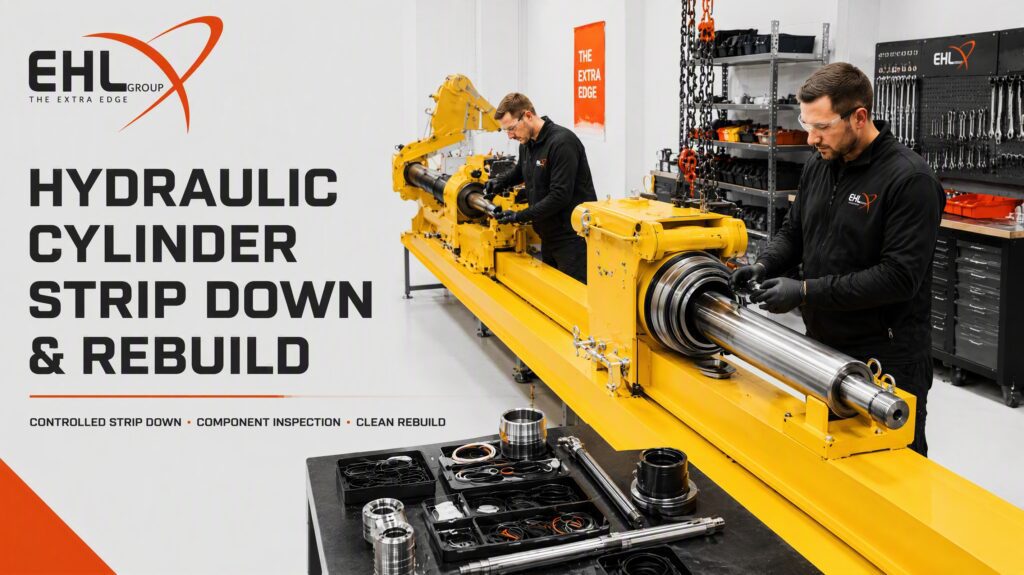
Hydraulic Cylinder Strip Down & Rebuild
While refurbishment addresses wear and restores functionality, some applications require a full strip-down and rebuild program to return cylinders to OEM performance standards.
EHL’s hydraulic cylinder strip-down and rebuild services provide a comprehensive approach for heavily utilised or critical hydraulic assets.
Comprehensive Inspection Process
Every rebuild begins with complete disassembly and detailed inspection of all components.
Our technicians evaluate:
- Cylinder tube condition
- Rod wear and damage
- Seal integrity
- Piston condition
- Thread condition
- Bearing surfaces
- Internal contamination levels
- Evidence of fatigue or structural damage
Measurements are recorded and compared against manufacturer specifications to determine repair requirements.
Precision Engineering and Component Restoration
Where appropriate, components may be repaired, machined or replaced to restore correct tolerances and performance characteristics.
Services may include:
- Precision machining
- Honing and polishing
- Rod replacement
- Welding repairs
- Surface treatments
- Custom seal installation
- Wear component replacement
The objective is not simply to reassemble the cylinder but to restore operational integrity and reliability under real-world operating conditions.
Final Testing and Verification
Following reassembly, each cylinder undergoes pressure testing and functional validation to confirm:
- Leak-free operation
- Correct pressure capabilities
- Proper seal performance
- Smooth operation
- Compliance with application requirements
This ensures equipment returns to service with confidence and reliability.
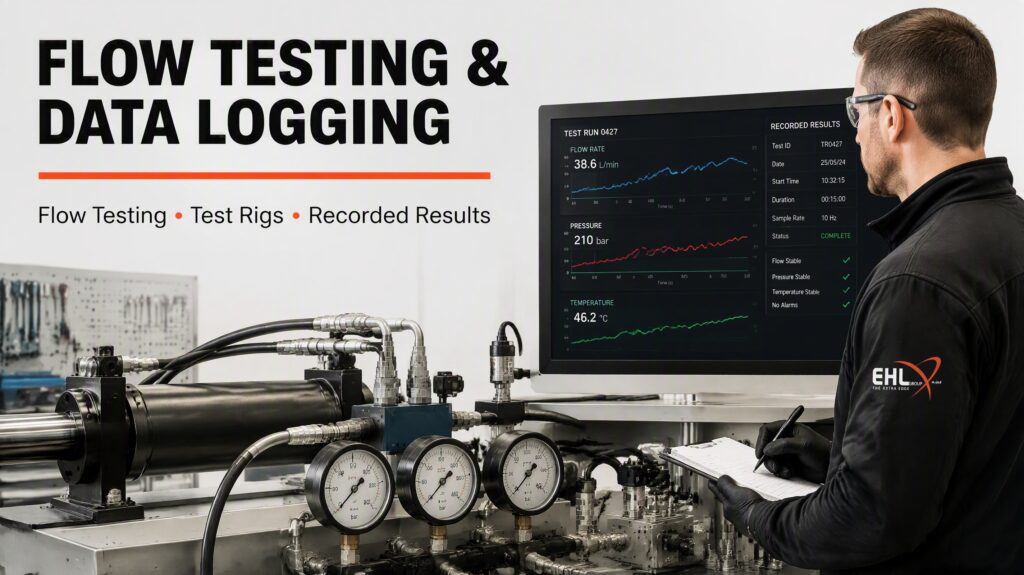
Flow Testing & Data Logging
Modern hydraulic diagnostics extend well beyond visual inspection. Advanced flow testing and data logging provide critical insights into hydraulic system performance that cannot be identified through conventional maintenance practices alone.
EHL utilises specialised testing equipment to analyse hydraulic systems under operational conditions, helping customers identify both existing and emerging issues.
The Importance of Flow Testing
Hydraulic systems rely on correct flow and pressure characteristics to operate efficiently.
Flow testing allows technicians to assess:
- Pump performance
- Flow rates
- Pressure losses
- Internal leakage
- Valve functionality
- System efficiency
- Component condition
Performance deviations often indicate wear, contamination, internal bypassing or developing component failures.
Early detection allows maintenance teams to address issues before catastrophic failures occur.
Data Logging for Predictive Maintenance
Data logging captures hydraulic performance information over time, providing a comprehensive picture of system behaviour during normal operation.
Parameters commonly monitored include:
- Flow rates
- Pressure levels
- Temperature
- Duty cycles
- Load conditions
- Performance trends
By analysing real-world operating data, EHL can identify intermittent faults and performance anomalies that may otherwise remain undetected.
Supporting Condition-Based Maintenance Strategies
Data-driven diagnostics support condition-based maintenance programs by enabling informed maintenance decisions based on actual equipment performance rather than fixed service intervals.
Benefits include:
- Reduced maintenance costs
- Lower downtime risk
- Improved asset utilisation
- Enhanced planning accuracy
- Greater equipment reliability
For critical hydraulic systems, flow testing and data logging are valuable tools in building a proactive maintenance strategy.
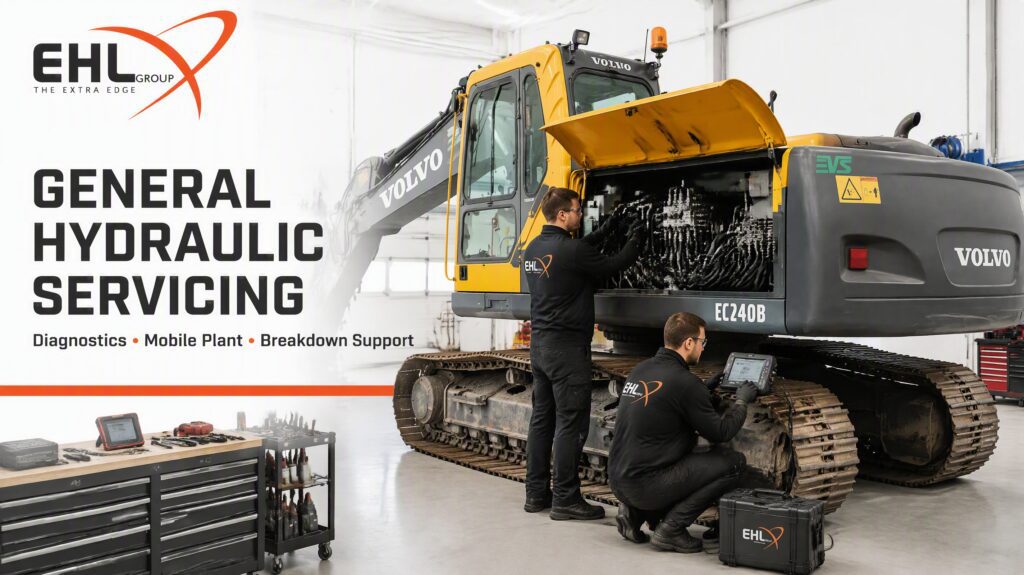
General Hydraulic Servicing
Routine hydraulic servicing remains one of the most effective ways to maximise equipment life and system reliability.
Even the most robust hydraulic systems are vulnerable to contamination, wear and fluid degradation if regular servicing is neglected.
EHL provides comprehensive hydraulic servicing solutions tailored to customer requirements and operating environments.
Preventative Maintenance Solutions
Regular servicing helps identify minor issues before they escalate into costly failures.
Our hydraulic maintenance services include:
- Hydraulic system inspections
- Fluid analysis
- Filter replacement
- Pressure checks
- Hose and fitting inspections
- Leak detection
- Component assessment
- System performance testing
Routine maintenance supports ongoing reliability while reducing the likelihood of unexpected equipment breakdowns.
Contamination Control
Industry studies consistently identify contamination as one of the leading causes of hydraulic component failure.
EHL places significant emphasis on contamination management through:
- Filtration assessment
- Clean servicing practices
- Hydraulic fluid condition monitoring
- System cleanliness verification
- Component cleanliness procedures
Maintaining fluid cleanliness contributes directly to improved hydraulic performance and component longevity.
Technical Expertise Across Hydraulic Systems
From mobile plant and heavy equipment through to industrial hydraulic power units and process equipment, EHL’s Technical Services team supports a wide range of hydraulic applications.
Our technicians combine practical field experience with advanced diagnostic capabilities to provide efficient and effective maintenance solutions.
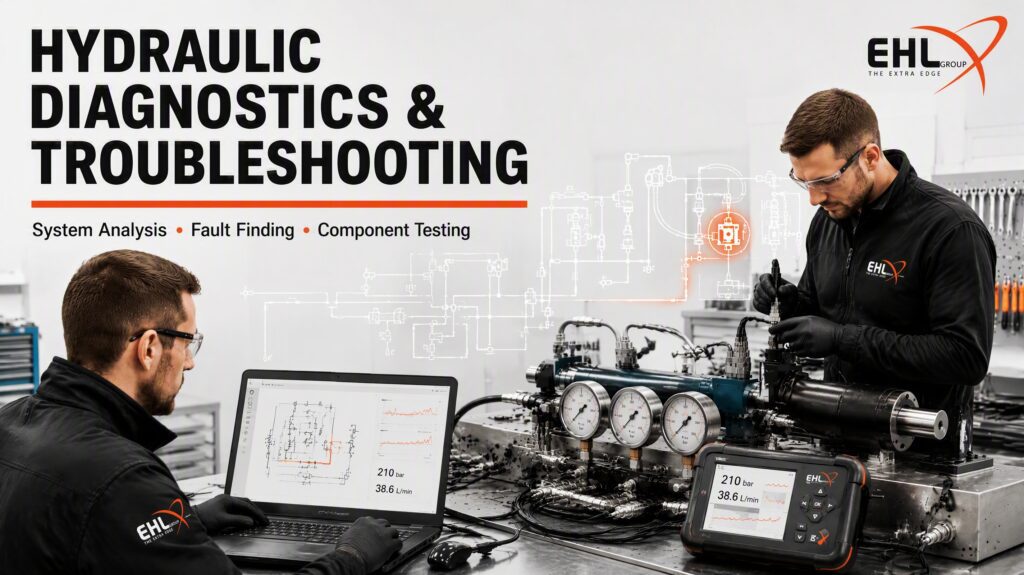
Hydraulic Diagnostics & Troubleshooting Expertise
Advanced Hydraulic Diagnostics & Troubleshooting
When hydraulic equipment begins to lose performance, the visible symptoms are often only a small part of a much larger underlying issue. Reduced operating speeds, overheating, pressure fluctuations, cylinder drift, excessive noise or repeated component failures can all indicate deeper system problems that require specialised diagnostic expertise.
EHL’s Technical Services team brings extensive experience in hydraulic diagnostics and troubleshooting, helping customers identify root causes quickly and accurately to minimise downtime and avoid unnecessary component replacement.
A Systematic Approach to Fault Finding
Effective hydraulic troubleshooting requires more than replacing failed parts. EHL adopts a structured diagnostic process that focuses on understanding how the entire hydraulic system is operating and identifying the factors contributing to performance issues.
Our technicians investigate:
- Pressure-related faults
- Flow restrictions and inefficiencies
- Pump and motor performance issues
- Valve operation and control problems
- Cylinder leakage and bypassing
- Hydraulic contamination concerns
- Heat generation and cooling deficiencies
- Hose and fitting failures
- System design and application issues
- Electrical and hydraulic interface faults
This comprehensive approach allows EHL to identify both symptoms and root causes, reducing the likelihood of recurring failures.
Leveraging Advanced Diagnostic Equipment
Accurate diagnosis depends on accurate data. EHL utilises specialised hydraulic testing equipment and condition monitoring tools to evaluate equipment performance in real-world operating conditions.
Our capabilities include:
- Hydraulic flow testing
- Pressure monitoring and analysis
- Digital data logging
- Fluid contamination assessment
- Temperature monitoring
- Performance trending
- Component efficiency testing
- Hydraulic system health assessments
By gathering and analysing operational data, EHL can detect subtle performance changes and identify developing faults before they result in catastrophic failure.
Root Cause Analysis That Delivers Long-Term Solutions
Recurring hydraulic failures can be frustrating and costly. In many cases, replacing a failed component without understanding why it failed simply leads to repeated breakdowns and ongoing maintenance costs.
EHL specialises in root cause analysis, helping customers uncover contributing factors such as:
- Contaminated hydraulic oil
- Incorrect filtration practices
- Poor system design
- Component misalignment
- Excessive operating pressures
- Inadequate maintenance procedures
- Unsuitable hydraulic fluid selection
- Operating conditions exceeding system design limits
Our objective is not just to repair equipment, but to implement corrective actions that improve long-term reliability and performance.
Supporting Critical Equipment Across Multiple Industries
EHL’s diagnostic expertise supports a broad range of hydraulic equipment and applications, including:
- Mining equipment
- Construction machinery
- Agricultural equipment
- Industrial processing plant
- Hydraulic power units
- Mobile hydraulic systems
- Material handling equipment
- Transport and lifting systems
Whether responding to an unexpected breakdown or supporting a planned maintenance strategy, our technicians have the knowledge and diagnostic capability to provide practical, effective solutions.
Reducing Downtime Through Proactive Diagnostics
Waiting for a hydraulic failure to occur is often the most expensive maintenance strategy. EHL works with customers to implement proactive diagnostic programs that identify early warning signs before operational impacts occur.
Through regular inspections, flow testing, pressure analysis and performance monitoring, organisations can:
- Reduce unplanned downtime
- Improve equipment availability
- Extend component life
- Lower maintenance costs
- Improve workplace safety
- Increase operational productivity
For critical hydraulic assets, proactive diagnostics provide valuable insight that supports informed maintenance decisions and long-term reliability.
Why Customers Trust EHL for Hydraulic Troubleshooting
EHL combines hands-on field experience, technical expertise and advanced diagnostic technology to deliver accurate fault identification and effective problem resolution. Our team understands that every hour of downtime impacts productivity, which is why we focus on delivering responsive support, practical recommendations and data-driven solutions.
From complex hydraulic faults and intermittent performance issues to full system evaluations and condition monitoring programs, EHL provides the technical capabilities required to keep hydraulic equipment operating safely, efficiently and reliably.
When hydraulic performance matters, EHL’s Technical Services team delivers the expertise, diagnostics and troubleshooting support needed to keep your operation moving.
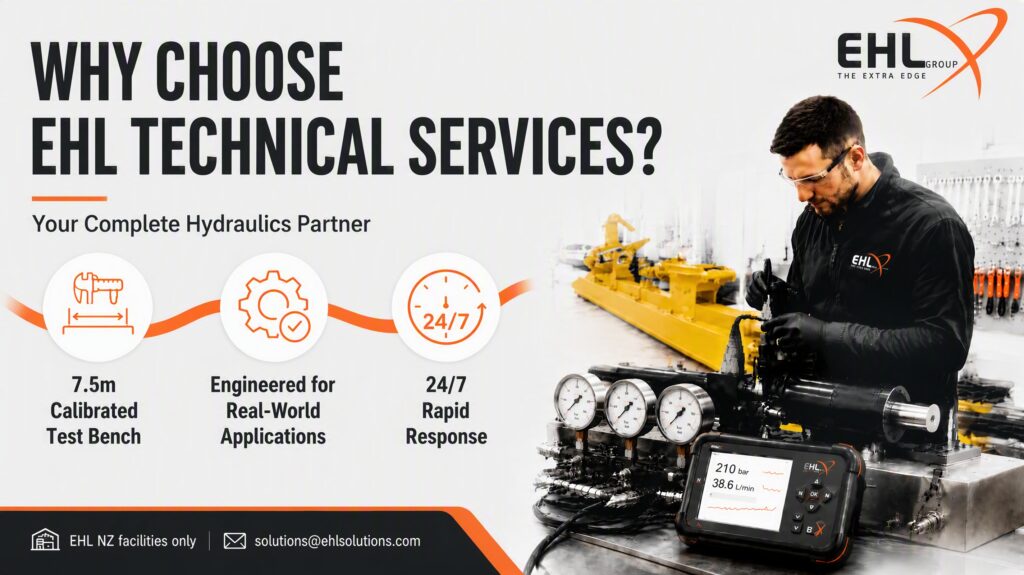
Why Choose EHL Technical Services?
Hydraulic reliability requires more than reactive repairs. It demands technical expertise, precision diagnostics and a proactive maintenance philosophy.
EHL delivers:
✅ Hydraulic cylinder refurbishment and repair
✅ Complete strip-down and rebuild services
✅ Advanced flow testing and hydraulic diagnostics
✅ Data logging and condition monitoring
✅ Preventative maintenance programs
✅ General hydraulic servicing and inspections
✅ Technical support and troubleshooting expertise
By focusing on root-cause analysis, quality workmanship and performance validation, EHL helps customers reduce downtime, improve asset reliability and achieve greater operational efficiency.
Partner with EHL for Hydraulic Reliability
Whether you’re managing a single critical asset or supporting an entire fleet of hydraulic equipment, EHL’s Technical Services team has the expertise, equipment and capability to support your operational goals.
If you’re experiencing hydraulic performance issues, planning preventative maintenance activities or looking to extend the life of critical hydraulic assets, contact EHL to discuss a tailored service solution that keeps your equipment operating at its best.
Frequently Asked Questions (FAQ)
What is hydraulic cylinder refurbishment?
Hydraulic cylinder refurbishment is the process of restoring a worn or damaged hydraulic cylinder to a serviceable condition. This typically involves disassembly, inspection, cleaning, replacement of seals and wear components, repair or replacement of damaged parts, and final testing to ensure reliable performance.
Refurbishment is often a cost-effective alternative to purchasing a new cylinder and can significantly extend equipment life.
How do I know if a hydraulic cylinder needs refurbishment?
Common indicators include:
- External oil leaks
- Reduced lifting or pushing force
- Slow cylinder operation
- Drift under load
- Scored or damaged piston rods
- Excessive corrosion
- Abnormal noises during operation
- Repeated seal failures
If any of these symptoms are present, a detailed inspection should be carried out to determine the extent of wear or damage.
What is involved in a hydraulic cylinder strip down and rebuild?
A strip down and rebuild involves completely dismantling the hydraulic cylinder, inspecting all internal and external components, replacing worn parts, machining or repairing damaged components where required, fitting new seals and wear rings, and reassembling the cylinder to specified tolerances.
The rebuilt cylinder is then pressure tested and verified before returning to service.
Is it better to rebuild or replace a hydraulic cylinder?
In many cases, rebuilding a hydraulic cylinder is significantly more economical than replacement, particularly for large, specialised or OEM components.
A professional assessment can determine whether the cylinder can be restored effectively or whether replacement represents the most practical long-term solution.
What is hydraulic flow testing?
Hydraulic flow testing measures the flow and pressure performance of pumps, motors, valves and complete hydraulic systems. It helps identify inefficiencies, internal leakage, component wear and performance losses that may not be visible during routine inspections.
Flow testing provides valuable diagnostic information that supports maintenance planning and fault finding.
Why is data logging important for hydraulic systems?
Data logging allows technicians to monitor hydraulic performance over time by recording key parameters such as:
- System pressure
- Flow rates
- Temperature
- Duty cycles
- Load conditions
This information helps identify intermittent faults, track performance trends and support predictive maintenance strategies that reduce the likelihood of unexpected failures.
What are the benefits of preventative hydraulic maintenance?
Preventative hydraulic maintenance helps organisations:
- Minimise unplanned downtime
- Extend equipment life
- Improve system efficiency
- Reduce repair costs
- Increase workplace safety
- Improve maintenance planning
- Maximise equipment availability
Regular servicing often identifies potential issues before they result in costly equipment failures.
How often should hydraulic systems be serviced?
Service intervals vary depending on equipment type, operating conditions, duty cycles and manufacturer recommendations.
As a general guide, hydraulic systems should undergo regular inspections, fluid condition monitoring and scheduled maintenance to ensure reliable performance and compliance with operational requirements.
EHL can assist in developing maintenance schedules tailored to specific applications and operating environments.
What causes hydraulic system failures?
Some of the most common causes include:
- Fluid contamination
- Poor maintenance practices
- Seal degradation
- Excessive heat
- Component wear
- Incorrect fluid selection
- Overloading
- Air ingress
- Improper system operation
Early diagnosis and routine servicing can prevent many of these issues from escalating into major failures.
Can EHL support onsite hydraulic troubleshooting?
Yes. EHL’s Technical Services team can provide field-based hydraulic diagnostics, inspections and troubleshooting support to identify performance issues and recommend effective corrective actions.
Our technicians utilise industry-leading diagnostic equipment and practical field experience to minimise downtime and restore operational reliability.
What industries can benefit from EHL’s hydraulic services?
EHL supports hydraulic systems across a wide range of industries, including:
- Mining and resources
- Construction
- Agriculture
- Manufacturing
- Transport and logistics
- Materials handling
- Waste and recycling
- Quarrying
- Infrastructure and utilities
Our hydraulic expertise can be applied to mobile equipment, fixed plant, industrial machinery and specialised hydraulic systems.
Why choose EHL for hydraulic refurbishment and servicing?
EHL combines practical field experience with advanced diagnostic capabilities to deliver comprehensive hydraulic solutions, including:
- Hydraulic cylinder refurbishment
- Complete strip down and rebuild services
- Flow testing and diagnostics
- Data logging and condition monitoring
- General hydraulic servicing
- Preventative maintenance programs
- Technical troubleshooting and support
Our focus is on improving reliability, reducing downtime and helping customers maximise the performance and lifespan of their hydraulic assets.
Need Expert Hydraulic Support?
Whether you’re experiencing recurring hydraulic issues, planning preventative maintenance, or looking to extend the life of critical equipment, EHL’s Technical Services team can provide tailored solutions backed by technical expertise and proven industry experience.
Contact EHL today to discuss your hydraulic servicing, refurbishment and diagnostic requirements.
solutions@ehlsolutions.com