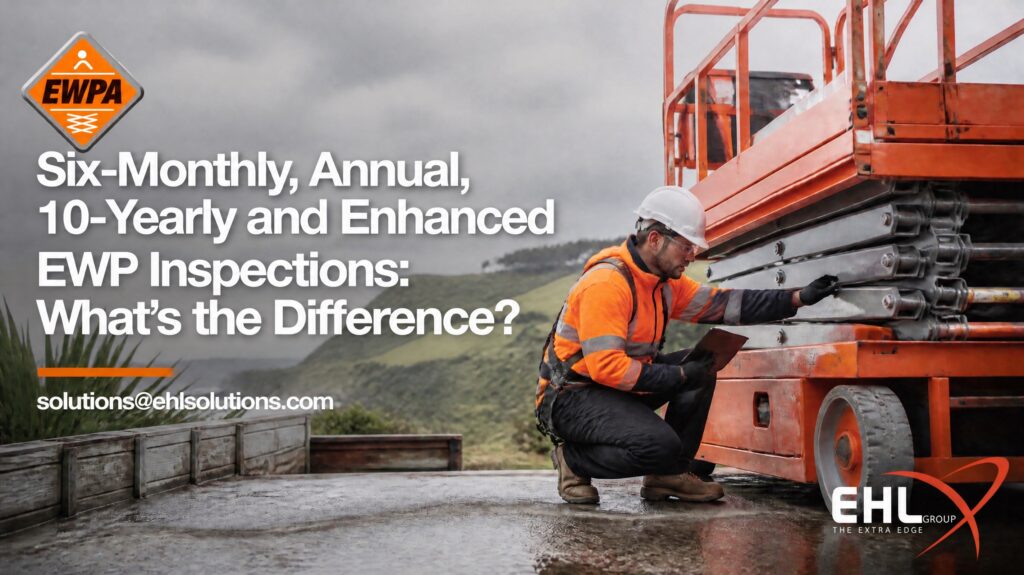
Six-Monthly, Annual, 10-Yearly and Enhanced EWP Inspections: What’s the Difference?
An EWP inspection is not simply a matter of putting a machine through a checklist and attaching a certificate. Different inspections are intended to identify different types of deterioration, wear, damage and safety risks throughout the life of the equipment.
For EWP owners and operators, understanding the difference between routine, six-monthly, periodic, enhanced and major inspections can help ensure equipment remains properly maintained, documented and fit for service.
EHL provides EWP inspection, testing and servicing support across New Zealand, helping owners understand what their equipment requires and what needs attention before it returns to service.

Introduction
An EWP inspection is not simply a matter of putting a machine through a checklist and attaching a certificate. Different inspections are intended to identify different types of deterioration, wear, damage and safety risks throughout the life of the equipment.
For EWP owners and operators, understanding the difference between routine, six-monthly, periodic, enhanced and major inspections can help ensure equipment remains properly maintained, documented and fit for service.
EHL provides EWP inspection, testing and servicing support across New Zealand, helping owners understand what their equipment requires and what needs attention before it returns to service.
Why Are There Different Types of EWP Inspections?
An elevated work platform operates under mechanical, hydraulic, electrical and structural loads. Components can deteriorate at different rates depending on the machine’s age, operating hours, environment, maintenance history and application.
A daily operator check, for example, serves a very different purpose from a major inspection.
Regular inspections help identify developing faults before they become more significant problems, while more comprehensive inspections examine components and systems that may not be adequately assessed through routine checks.
For New Zealand MEWPs, inspection and maintenance requirements are associated with standards including AS 2550.10 and AS/NZS 1418.10, together with manufacturer requirements and applicable workplace safety obligations. WorkSafe guidance states that six-monthly inspections must be carried out by a competent person and that major or enhanced inspections involve more extensive examination of critical components.
Six-Monthly Inspections
The six-monthly inspection is a significant examination of the machine and its safety-critical systems.
It can include:
- structural components
- hydraulic systems
- electrical systems
- controls
- emergency systems
- safety interlocks
- brakes
- pins and bushes
- cylinders
- platform and guardrails
- slew and drive systems
- stabilisers and outriggers
- attachments and connections
- signs of corrosion, wear or damage.
The inspection should also take account of the manufacturer’s maintenance requirements and the machine’s service history.
If safety-related faults are identified, those faults need to be addressed before the machine is returned to service.
Annual or Periodic Inspections
A periodic inspection provides another level of examination within the equipment’s maintenance regime.
The exact requirements can depend on the machine, manufacturer and applicable inspection programme. The inspection may include more detailed assessment of components, adjustment, wear, hydraulic and mechanical systems, safety devices and operational functions.
The important point is that an annual inspection should not simply duplicate a six-monthly certificate. It should form part of a structured maintenance and inspection programme appropriate to the particular EWP.
Enhanced Periodic Inspections
An enhanced periodic inspection goes further again.
WorkSafe guidance indicates that enhanced periodic inspections are undertaken at five-year intervals and involve inspection and testing of critical components in accordance with the manufacturer’s inspection programme.
Depending on the equipment, this can involve substantially more detailed examination than a routine inspection.
The objective is to identify deterioration that may not be apparent during normal operational checks.
What Happens at 10 Years?
A 10-year-old EWP reaches an important point in its inspection history.
WorkSafe guidance identifies major inspection requirements for MEWPs at the 10-year point where an enhanced periodic inspection has not already addressed the relevant requirements. Major inspections can also apply in other circumstances, including certain recommissioning situations where adequate continuous records are unavailable.
A major inspection can require detailed examination of critical components and, where necessary, disassembly or removal of coatings, grease or corrosion so components can be properly assessed.
Why the Machine’s History Matters
Inspection does not happen in isolation.
A machine with comprehensive maintenance, inspection and repair records provides much more information to the person assessing it than a machine with an incomplete history.
Records can help establish:
- what components have been replaced
- what repairs have been undertaken
- when previous inspections occurred
- whether defects were identified
- whether modifications have been made
- how the equipment has been used and maintained.
WorkSafe specifically highlights the importance of continuous working and maintenance records for MEWPs.
Inspection Is Only Part of the Process
An inspection identifies the condition of the equipment at a particular point in time. It does not replace proper operation, maintenance or pre-use checks.
Likewise, obtaining a certificate does not mean an owner can ignore defects that subsequently develop.
A properly managed EWP should have an ongoing programme covering operation, maintenance, inspection, repairs, documentation and certification.

How EHL Can Help?
EHL provides EWP inspection and servicing support from its New Plymouth facility, servicing customers throughout New Zealand.
Our capability includes inspection, testing, maintenance and assessment of EWPs and associated equipment, with the aim of helping customers understand the condition of their equipment and the work required to keep it operating safely and reliably.
FAQs
What is a six-monthly EWP inspection?
A six-monthly EWP inspection is a formal examination of a mobile elevating work platform by a competent person. It assesses the machine’s condition, safety systems, structural components and other relevant equipment requirements.
What is an enhanced EWP inspection?
An enhanced periodic inspection is a more detailed inspection of critical components, generally undertaken at five-year intervals in accordance with the applicable inspection programme and manufacturer requirements.
What happens when an EWP reaches 10 years old?
A 10-year-old EWP may require a major inspection depending on its inspection history and the applicable requirements. The inspection can involve detailed examination of critical components and, where necessary, disassembly.
Is an EWP inspection the same as routine maintenance?
No. Maintenance involves servicing, adjustment and replacement of components, while an inspection assesses the condition and safety of the equipment. Both form part of an effective equipment management programme.
Who can inspect an EWP in New Zealand?
The required level of inspection must be undertaken by an appropriately competent person in accordance with the applicable standards, manufacturer requirements and New Zealand workplace safety requirements.