Onsite Nitrogen Generation for Food & Wine Production
In modern food and wine production, product quality is no longer determined solely by raw ingredients or processing techniques—it is heavily influenced by how effectively critical utilities are managed. Among these, nitrogen plays a pivotal role in protecting product integrity, controlling oxidation, and maintaining consistency across every stage of production.
Yet for many facilities, nitrogen supply remains a hidden vulnerability. Reliance on bulk deliveries or cylinders introduces variability, logistical complexity, and exposure to supply disruptions—all of which can directly impact production continuity and product quality.
Onsite nitrogen generation represents a fundamental shift from supply dependency to engineered process control. By producing nitrogen at the point of use, facilities gain precise control over purity, pressure, and availability—transforming nitrogen from a consumable into a fully integrated utility.
At EHL, this transformation is driven by deep engineering expertise, multi-technology capability, and a proven ability to deliver end-to-end solutions. From membrane systems through to high-flow twin tower PSA, EHL designs nitrogen systems that are not only technically optimised, but fully aligned with the operational realities of food and wine production across Australia and New Zealand.
This article explores the engineering principles behind onsite nitrogen generation, the technologies available, and why partnering with EHL delivers measurable performance, reliability, and long-term value.
Enabling Process Integrity with Onsite Nitrogen Generation: A Technical Perspective from EHL
In food and wine production environments, nitrogen is a critical utility—used extensively for inerting, blanketing, purging, packaging, and oxidation control. Maintaining product quality, extending shelf life, and ensuring process stability all rely on the availability of a consistent, high-purity nitrogen supply.
Traditionally, facilities have relied on delivered nitrogen (liquid or cylinders), introducing logistical complexity, supply risk, and fluctuating cost structures. As operations scale and production efficiency becomes increasingly data-driven, onsite nitrogen generation has emerged as a technically superior and economically sustainable alternative.
EHL’s engineering expertise enables food and beverage producers across Australia and New Zealand to design and deploy optimised, site-specific nitrogen generation systems, delivering both operational resilience and measurable cost savings.
The Role of Nitrogen in Food & Wine Engineering
From a process engineering perspective, nitrogen serves multiple critical functions:
- Tank blanketing and inerting to prevent oxidation and maintain product integrity
- Modified atmosphere packaging (MAP) to extend shelf life and preserve freshness
- Oxygen displacement in transfer lines to minimise microbial growth
- Pressurisation and purging of vessels and pipelines
- Sparging in wine production to control dissolved oxygen levels
The technical challenge is not simply producing nitrogen—it is delivering the correct purity, pressure, flow rate, and reliability profile across highly variable production conditions.
Limitations of Delivered Nitrogen Systems
Engineering teams increasingly recognise the constraints of traditional nitrogen supply methods:
- Supply chain dependency and risk of production interruption
- Variable purity control, particularly across changing demand profiles
- Handling and safety risks associated with cryogenic storage and cylinders
- High lifecycle costs, including transport, rental, and evaporation losses
- Limited scalability as production demand grows
These limitations have driven the shift toward onsite generation systems engineered for process integration.
Onsite Nitrogen Generation: A Systems Engineering Approach
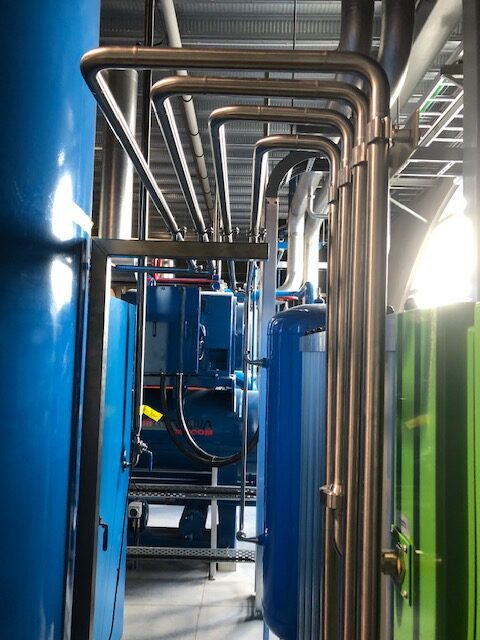
EHL approaches nitrogen generation as an integrated utility system—not just a piece of equipment. Key design considerations include:
- Flow demand profiling across production cycles
- Required nitrogen purity (typically 95%–99.999% depending on application)
- Pressure requirements and buffer storage design
- Redundancy and uptime requirements (critical for continuous production)
- Integration with control systems (SCADA/PLC)
- Energy efficiency and lifecycle cost modelling
EHL Technology Capability: Selecting the Right System
One of EHL’s key differentiators is the ability to deploy multiple nitrogen generation technologies, selecting the optimal solution based on process requirements—not supplier limitations.
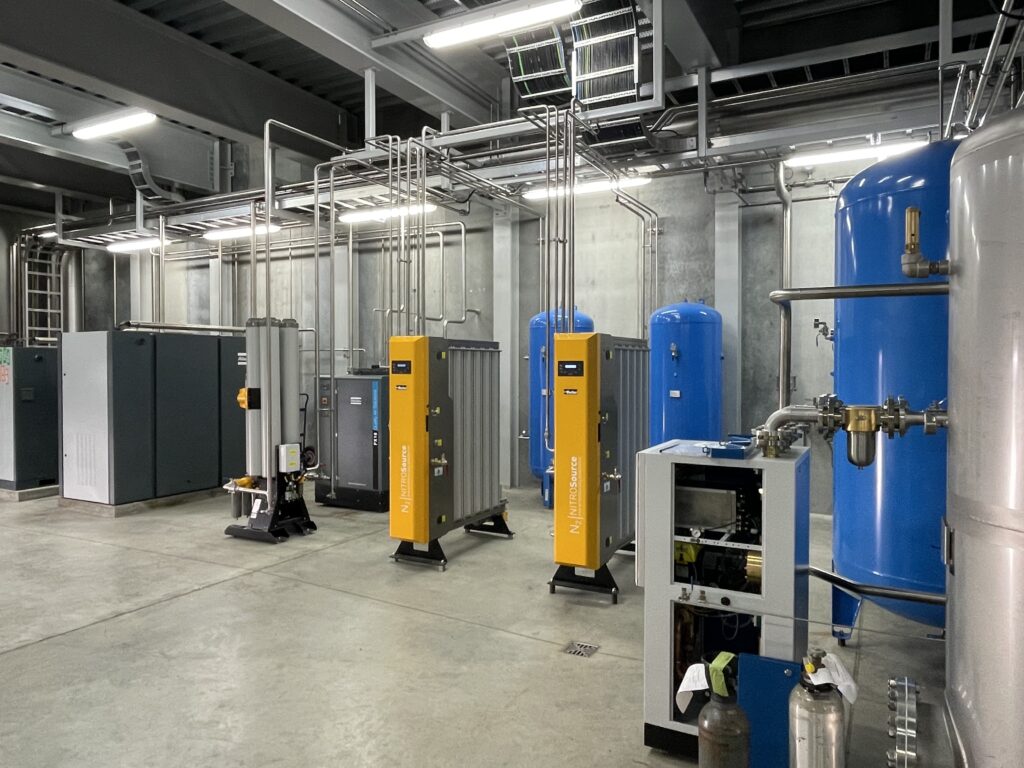
1. Membrane Nitrogen Systems
Best suited for:
- Lower purity requirements (typically 95–99.5%)
- Continuous flow applications
- Lower CAPEX and compact footprint
Technical characteristics:
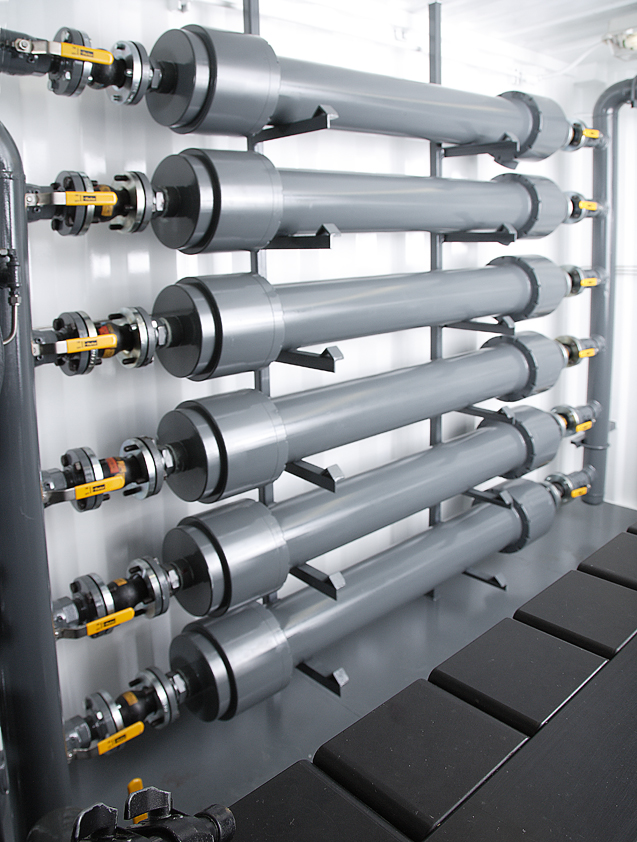
- Selective permeation of oxygen through polymer membranes
- Fast response to demand variation
- Minimal mechanical complexity
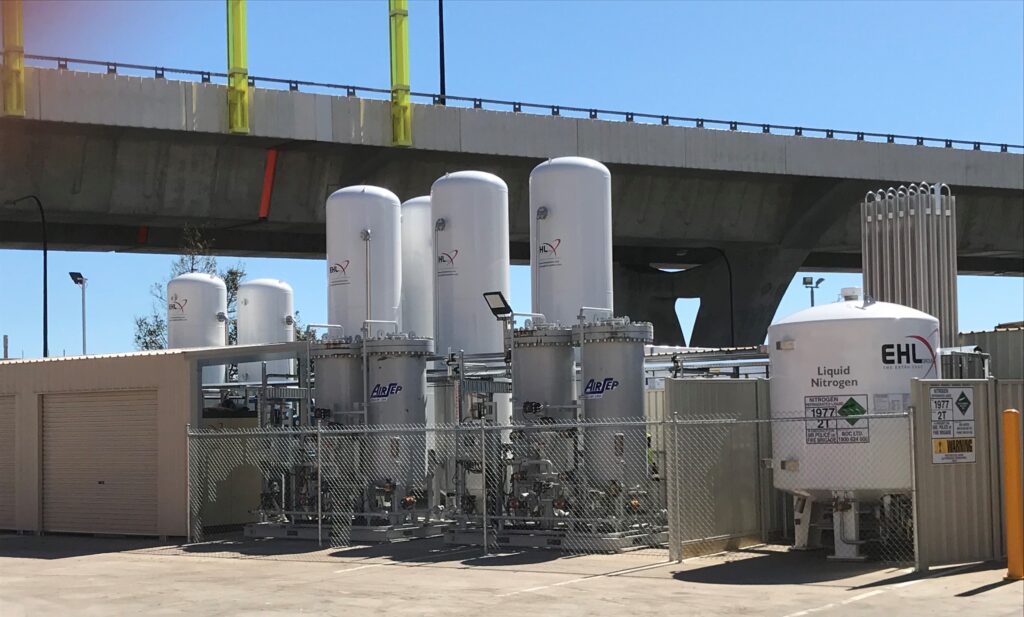
2. Modular PSA (Pressure Swing Adsorption) Systems
Best suited for:
- Medium to high purity applications (up to 99.999%)
- Scalable operations
- Facilities requiring flexibility and redundancy
Technical characteristics:
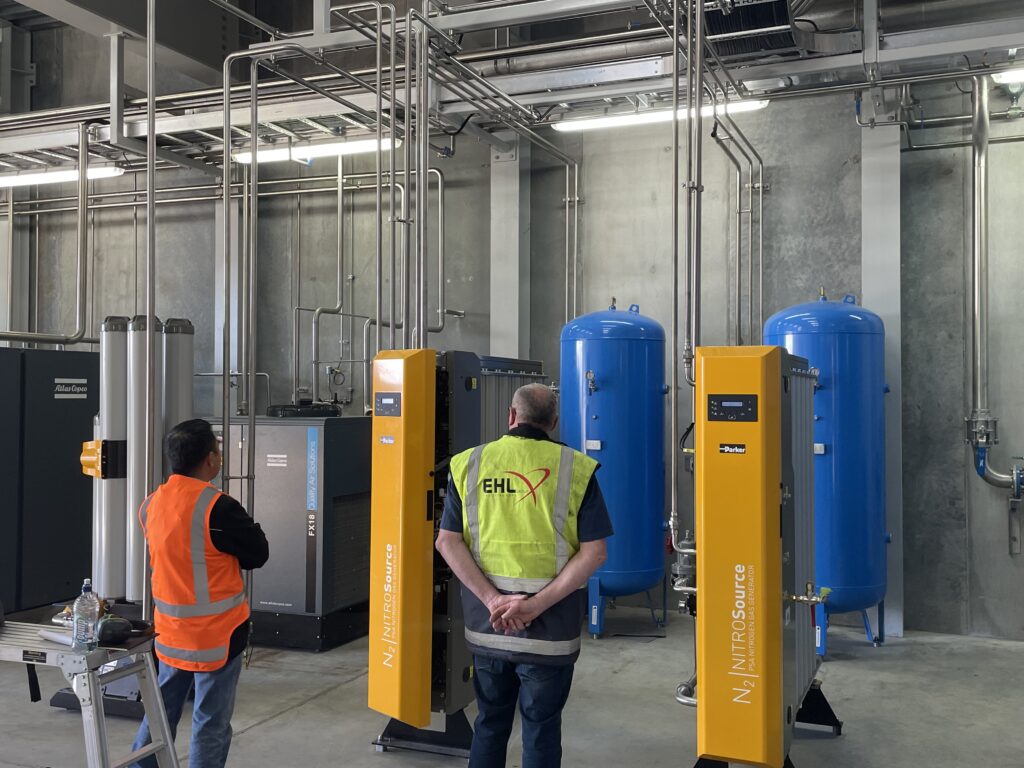
- Carbon molecular sieve (CMS) adsorption of oxygen
- Modular design enabling staged expansion
- Integrated control systems for efficiency optimisation
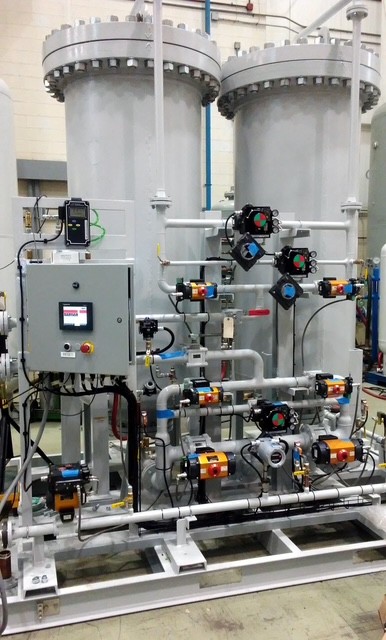
3. Twin-Tower High Flow PSA Systems
Best suited for:
- High-volume, high-purity demands
- Large wineries, breweries, and industrial-scale food production
Technical characteristics:
- Dual adsorption towers operating in alternating cycles
- High flow rates with consistent purity control
- Robust design for continuous duty operation
Engineering Integration: From Concept to Commissioning
EHL delivers nitrogen generation solutions as fully engineered projects, not standalone systems.
End-to-End Capability Includes:
- Process assessment and feasibility studies
- Detailed system design and modelling
- Equipment selection and specification
- Fabrication and installation management
- Integration with existing plant infrastructure
- Commissioning, validation, and performance testing
This ensures that nitrogen systems are fully aligned with plant operations and deliver guaranteed performance outcomes.
Operational Benefits for Food & Wine Producers
From an engineering and operational perspective, onsite nitrogen delivers:
✅ Consistent purity and pressure control across all applications
✅ Improved product quality and shelf life
✅ Reduced operational risk (no reliance on external supply)
✅ Lower total cost of ownership
✅ Enhanced process control through automation
✅ Scalable infrastructure aligned to production growth
Ongoing Support Across Australia & New Zealand
EHL’s value extends beyond project delivery. With a strong regional presence, EHL provides:
- Preventive and predictive maintenance programs
- Performance monitoring and optimisation
- System upgrades and expansions
- Ongoing technical support capabilities
- Spare parts and service coverage
This ensures long-term system reliability and continuous improvement.
Proven Experience in Food & Beverage Engineering
EHL brings extensive experience across:
- Wineries and beverage producers
- Dairy and food processing plants
- Packaging and bottling facilities
- Cold chain and storage environments
By combining process engineering expertise with real-world operational understanding, EHL ensures nitrogen systems are tailored to the specific demands of each facility.
Engineering the Future of Production Utilities
As food and wine producers face increasing pressure to improve efficiency, reduce costs, and maintain product quality, onsite nitrogen generation is no longer optional—it is a strategic engineering decision.
With its multi-technology capability, end-to-end delivery model, and ongoing regional support, EHL provides a future-proof solution for nitrogen generation across Australia and New Zealand.
Contact: solutions@ehlsolutions.com