Landing Craft and Davit Line Tensioning Systems
Marine operations rarely take place in calm, predictable conditions. Launching and recovering landing craft, rescue boats, autonomous vessels or mission-critical cargo often requires crews to work in dynamic environments where vessel motion, wave action, wind and tidal forces can quickly turn routine handling operations into complex and high-risk tasks. Maintaining control of suspended loads while protecting personnel, equipment and vessels is therefore essential to safe and efficient maritime operations.
Landing Craft and Davit Line Tensioning Systems are engineered to address these challenges by actively controlling line tension throughout launch, recovery and cargo transfer processes. By minimising shock loading, reducing uncontrolled vessel and load movement, and compensating for changing sea conditions, these advanced systems enhance operational safety, improve handling precision and reduce the physical demands placed on crew members. Whether supporting naval, offshore, commercial or autonomous marine applications, line tensioning technology enables operators to conduct launch and recovery operations with greater confidence, reliability and efficiency.
Explore how EHL’s Landing Craft and Davit Line Tensioning Systems work, why they are becoming an essential component of modern marine operations, and the significant safety, operational and lifecycle benefits they deliver across a wide range of maritime applications.
Improving Safety, Control and Operational Efficiency in Marine Launch and Recovery Operations
Marine launch and recovery operations are among the most demanding and safety-critical activities undertaken onboard commercial, offshore, naval and government vessels. Whether deploying landing craft, rescue boats, workboats, autonomous surface vessels (USVs), remotely operated equipment, or transferring mission-critical cargo, operators must contend with constantly changing sea states, vessel movement, environmental conditions and dynamic loads.
Traditional launch and recovery systems can expose personnel, vessels and equipment to significant risks when operating in rough seas or congested ports. Dynamic vessel motions, pendulum effects, uncontrolled line movement and sudden shock loading all contribute to increased operational hazards.
Modern Landing Craft and Davit Line Tensioning Systems provide an engineered solution that significantly improves safety, operational control and equipment protection throughout launch, recovery and cargo handling operations.
At EHL Group, our engineered line tensioning systems are designed specifically for each vessel and operational profile, delivering precise load control while reducing manual intervention, improving deployment efficiency and enhancing overall operational safety.
Understanding Line Tensioning Systems
A line tensioning system is an actively controlled mechanical and hydraulic system that maintains a predetermined tension within lifting, towing or handling lines throughout launch, recovery and transfer operations.
Unlike conventional fixed winch systems that rely solely on operator input, active tensioning systems continuously compensate for:
- Vessel heave
- Pitch and roll motion
- Tidal movement
- Wave-induced dynamic loading
- Landing craft movement
- Cargo motion
- Relative vessel movement during alongside operations
By maintaining controlled tension, the system prevents slack line formation while simultaneously avoiding excessive shock loading that can damage equipment or endanger personnel.
The result is smoother, safer and significantly more predictable handling operations.
Why Line Tension Matters
Marine lifting operations rarely involve static loads.
Even when lifting relatively light equipment, the forces generated by vessel motion can exceed the static weight of the load several times over.
When tension is lost in a lifting line, slack develops before the load suddenly re-engages under tension. This rapid load transfer creates shock loading that can:
- Overload davits and cranes
- Damage wire ropes or synthetic lifting lines
- Accelerate fatigue within structural components
- Increase wear on hydraulic systems
- Cause uncontrolled load swing
- Damage landing craft hulls
- Increase risk to deck personnel
Maintaining constant controlled tension virtually eliminates these shock events.
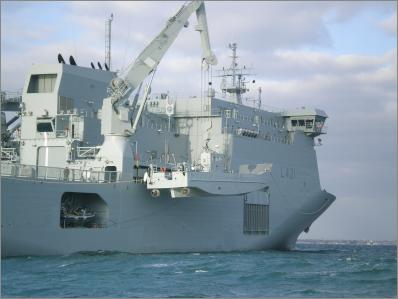
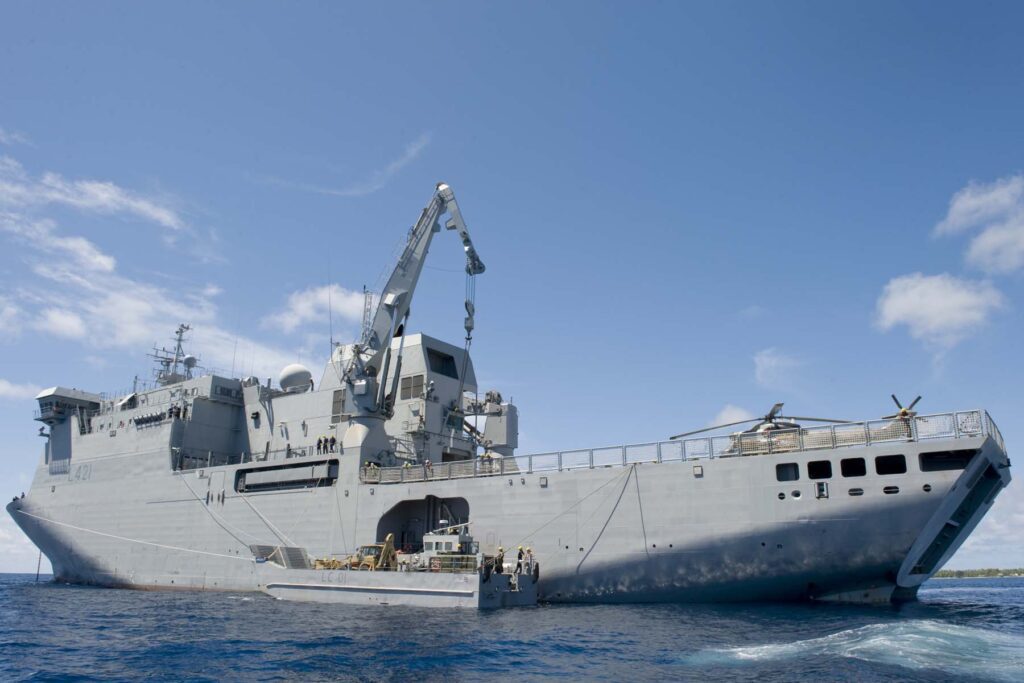
Landing Craft Operations
Landing craft frequently operate in highly dynamic environments where accurate positioning alongside vessels or docks is essential.
During launch and recovery, operators must control:
- Vessel movement
- Landing craft movement
- Wave action
- Wind loading
- Current
- Relative motion between both vessels
Without controlled line tension, the landing craft may surge unexpectedly, impacting the mother vessel or dock infrastructure.
An engineered tensioning system continuously manages these forces, allowing operators to maintain stable positioning throughout:
- Launch operations
- Recovery operations
- Personnel transfers
- Vehicle embarkation
- Cargo loading
- Cargo unloading
- Beach landing support
- Offshore logistics operations
The result is smoother operations with significantly reduced risk of impact damage.
Davit Launch and Recovery Systems
Davit systems remain one of the most common methods for deploying:
- Rescue boats
- Fast rescue craft (FRC)
- Rigid inflatable boats (RIBs)
- Survey vessels
- Autonomous surface vessels
- Workboats
- Personnel transfer craft
Traditional davit systems require experienced operators to manually compensate for vessel movement.
Modern line tensioning technology automates much of this process.
Hydraulic or electro-hydraulic tension control continuously adjusts line force during:
- Lowering
- Water entry
- Disconnect procedures
- Recovery
- Lifting
- Stowage
This greatly reduces operator workload while improving repeatability and deployment speed.
Improved Safety During Launch and Recovery
Safety is the primary reason many operators are adopting active line tensioning technology.
Key safety improvements include:
Reduced Shock Loading
Maintaining constant line tension prevents sudden dynamic loading that can overstress lifting equipment.
Controlled Boat Movement
Landing craft remain under positive control throughout launch and recovery, reducing collision risks.
Reduced Pendulum Effect
The system limits uncontrolled swinging caused by vessel movement and wave action.
Lower Crew Exposure
Automation reduces the number of personnel required on exposed working decks.
Improved Personnel Safety
Controlled equipment movement reduces pinch points, crush hazards and unexpected load movement.
Enhanced Equipment Protection
Boats, davits, cranes, lifting frames and deck structures experience significantly lower fatigue loading.
Improving Cargo Handling Operations
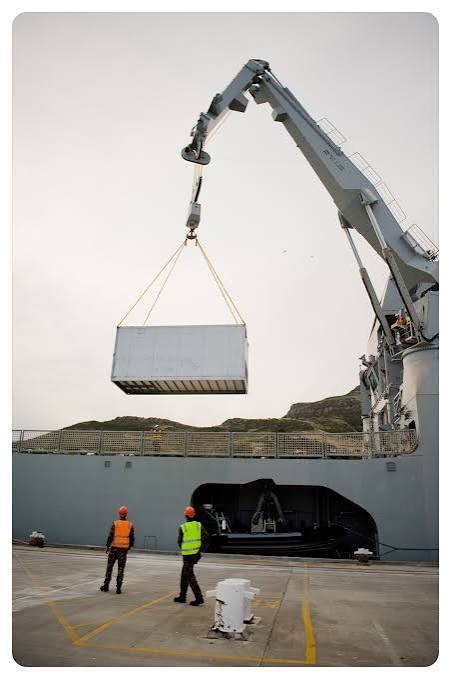
Line tensioning systems are equally valuable when transferring cargo between vessels or between vessel and shore.
Applications include:
- General cargo
- Defence equipment
- Offshore supplies
- Containers
- Fuel modules
- Scientific equipment
- Humanitarian aid
- Emergency response equipment
Dynamic load control reduces cargo oscillation while maintaining stable positioning during lifting.
This provides operators with greater confidence during precision placement operations.
Enhanced Efficiency During Load-On and Load-Off Operations
Efficient marine logistics depend upon predictable handling systems.
Active tensioning contributes directly to shorter operational cycles by:
- Reducing vessel positioning adjustments
- Minimising waiting for calm sea conditions
- Improving first-time placement accuracy
- Decreasing manual handling
- Reducing equipment repositioning
- Lowering launch and recovery times
- Minimising operational delays
For commercial operators, these efficiencies translate directly into improved vessel utilisation and reduced operational costs.
Benefits for Unmanned Vessel Operations
As autonomous and remotely operated vessels become increasingly common, launch and recovery systems require greater precision than ever before.
Unmanned vessels cannot compensate for launch errors through onboard crew intervention.
Active tensioning systems provide:
- Accurate deployment profiles
- Repeatable recovery sequences
- Stable launch geometry
- Controlled lifting speeds
- Reduced impact during retrieval
- Integration with automated control systems
These capabilities are essential for modern USV and autonomous marine operations.
Hydraulic and Electro-Hydraulic Engineering
EHL Group’s systems utilise proven hydraulic engineering principles combined with intelligent control technology.
Depending on project requirements, systems may incorporate:
- Closed-loop hydraulic control
- Load sensing hydraulics
- Electro-hydraulic proportional valves
- Servo-controlled actuators
- Variable speed winches
- Real-time load monitoring
- Integrated PLC control
- Human Machine Interface (HMI) operation
- Remote monitoring capability
- Condition monitoring and diagnostics
Each solution is engineered to suit the vessel’s operational profile, classification requirements and available onboard power systems.
Custom Engineered for Every Vessel
No two vessels operate under identical conditions.
Every EHL Group tensioning system is designed around the customer’s operational requirements, considering factors such as:
- Vessel type
- Deck layout
- Davit configuration
- Landing craft dimensions
- Safe Working Load (SWL)
- Operational sea state
- Classification society requirements
- Environmental conditions
- Mission profile
- Existing hydraulic infrastructure
- Automation requirements
- Future expansion capability
The result is a fully integrated solution that enhances vessel capability while maintaining compliance with applicable marine standards.
Applications Across Marine Industries
Our launch, recovery and tensioning systems support a wide range of industries, including:
- Defence and naval vessels
- Offshore oil and gas
- Offshore wind farms
- Commercial shipping
- Port authorities
- Harbour services
- Emergency response organisations
- Border protection agencies
- Fisheries
- Scientific research vessels
- Survey vessels
- Autonomous vessel operators
- Superyachts
- Government marine agencies
Why Choose EHL Group?
EHL Group combines extensive hydraulic engineering expertise with marine systems integration to deliver robust launch and recovery solutions for some of the world’s most demanding operating environments.
Our capabilities include:
- Custom engineered solutions
- Hydraulic system design and manufacture
- Mechanical engineering
- Electrical and control system integration
- PLC and HMI programming
- 3D CAD design and finite element analysis (FEA)
- Factory acceptance testing (FAT)
- Commissioning and sea trials
- Preventative maintenance programs
- Global technical support
- Lifecycle servicing and upgrades
Every system is engineered to maximise safety, minimise downtime and deliver reliable long-term performance throughout the vessel’s operational life.
Engineering Confidence into Every Launch and Recovery
Marine operations demand precision, reliability and uncompromising safety. Landing Craft and Davit Line Tensioning Systems play a vital role in reducing the risks associated with dynamic load handling while improving operational efficiency across launch, recovery and cargo transfer activities.
By actively managing line tension throughout every phase of an operation, these systems reduce shock loading, protect valuable assets, improve crew safety and enable reliable handling in challenging sea and port conditions.
Whether supporting defence operations, offshore logistics, emergency response or commercial marine applications, EHL Group delivers fully customised launch and recovery solutions engineered to meet the unique operational requirements of every vessel. Through advanced hydraulic engineering, intelligent control systems and proven marine expertise, we help operators achieve safer, faster and more efficient boat and cargo handling in even the most demanding maritime environments.
Frequently Asked Questions
1. What is a Landing Craft and Davit Line Tensioning System?
A Landing Craft and Davit Line Tensioning System is an engineered hydraulic or electro-hydraulic solution that actively maintains controlled tension on lifting or handling lines during boat launch, recovery and cargo transfer operations. The system compensates for vessel movement and changing sea conditions to improve safety, control and operational efficiency.
2. Why are line tensioning systems important in marine operations?
Marine environments are constantly changing due to waves, swell, wind and vessel motion. A line tensioning system minimises slack line, shock loading and uncontrolled movement, reducing the risk of damage to vessels, equipment and cargo while improving crew safety.
3. What types of vessels can benefit from a line tensioning system?
These systems are suitable for a wide range of vessels, including naval ships, offshore support vessels, commercial ships, research vessels, patrol boats, superyachts, workboats and autonomous or unmanned surface vessels (USVs).
4. Can the system be customised for different applications?
Yes. Every EHL Group line tensioning system is designed to suit the vessel’s operational requirements, deck layout, davit configuration, safe working load (SWL), classification requirements and intended operating environment.
5. How do line tensioning systems improve crew safety?
By maintaining constant line tension and controlling dynamic loads, the system reduces sudden load movement, pendulum effects and impact forces. This lowers the risk of personnel injury, minimises manual intervention and reduces the number of crew required during launch and recovery operations.
6. Can line tensioning systems be used for cargo handling as well as boat launch and recovery?
Absolutely. In addition to launching and recovering landing craft and rescue boats, these systems are commonly used for loading, unloading and transferring general cargo, defence equipment, offshore supplies, scientific equipment and specialised payloads.
7. Do line tensioning systems improve operational efficiency?
Yes. By providing greater control over suspended loads and compensating for vessel motion, operators can complete launch, recovery and cargo handling operations more quickly, accurately and with fewer delays caused by changing sea conditions.
8. Can the systems be integrated with existing hydraulic and control systems?
Yes. EHL Group designs line tensioning systems to integrate seamlessly with existing hydraulic power units, winches, davits, cranes and vessel control systems. Additional features such as PLC automation, remote monitoring and HMI interfaces can also be incorporated.
9. What maintenance is required?
Routine preventative maintenance includes inspection of hydraulic components, wire ropes or synthetic lines, sensors, control systems and mechanical assemblies. EHL Group also provides servicing, commissioning, upgrades and ongoing technical support to maximise system reliability and operational life.
10. Why choose EHL Group for a line tensioning solution?
EHL Group delivers fully customised marine handling systems backed by expertise in hydraulic engineering, mechanical design, electrical integration and marine automation. Every solution is engineered to enhance safety, improve operational performance and provide reliable long-term service in demanding maritime environments.