Why Your Vessel’s Gangway Is a Hidden Risk — And How to Manage It
In maritime operations, critical systems like propulsion, navigation, and cargo handling receive constant attention—and necessarily so.
But one of the most frequently used systems onboard, and one that directly impacts safety, compliance, and operational continuity, is often overlooked:
Your gangway or accommodation ladder.
It’s not just a piece of equipment.
It’s a critical control point—and in many cases, an unmanaged risk.
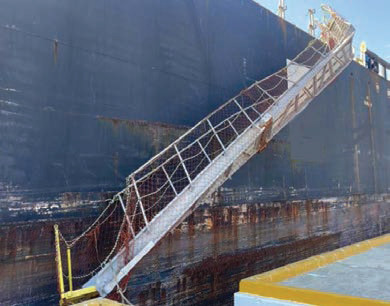
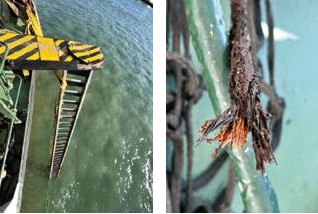
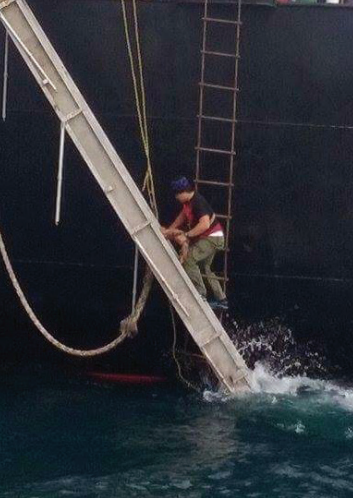
The Problem: An Overlooked Risk at the Frontline of Operations
Every crew change, inspection, and port call relies on safe and reliable access between the vessel and shore.
Yet gangways and accommodation ladders are often:
- Maintained reactively rather than proactively
- Treated as low-priority assets
- Poorly documented or inconsistently inspected
- Overlooked until failure occurs
This creates a range of operational risks:
1. Safety Exposure
Crew transfers are routine—but they carry inherent risk.
A failure in access equipment can result in serious injury or worse.
2. Operational Disruption
When a gangway becomes inoperable:
- Crew changes may be delayed
- Port operations can be interrupted
- Vessel schedules are impacted
3. Compliance Failures
Inspection regimes require:
- Certification
- Maintenance records
- Proof of ongoing compliance
Gaps in these areas can lead to failed audits or detention.
The Reality: When Access Fails, Everything Stops
Unlike many onboard systems, access equipment sits at the intersection of people, operations, and compliance.
That means failure is not isolated—it has a ripple effect:
- Operational delays
- Increased costs
- Elevated safety risk
- Reputational and regulatory consequences
And yet, in many organisations, access systems are still treated as a maintenance task, not a managed risk.
A Shift in Thinking: From Equipment to Risk Management
To truly reduce exposure, vessel operators need to change their approach.
The question is no longer:
“When was this gangway last serviced?”
It becomes:
“Are we actively managing the risk associated with our access systems?”
This requires a move from:
- Reactive repairs → Preventative planning
- Isolated servicing → Lifecycle oversight
- Basic compliance → Assured readiness
How EHL Approaches Maritime Access Differently
At EHL, gangways and accommodation ladders are not viewed as standalone assets.
They are approached as critical systems that must be actively managed to reduce risk and ensure operational continuity.
This approach is built on three core principles:
1. Assurance: Confidence in Compliance and Performance
EHL ensures that access systems are:
- Inspected in line with regulatory and class expectations
- Properly certified and documented
- Maintained to meet current safety standards
This gives operators confidence that their equipment is audit-ready and compliant at all times.
2. Continuity: Keeping Operations Moving
Unplanned downtime is one of the biggest hidden costs in maritime operations.
EHL helps minimise this through:
- Preventative maintenance strategies
- Early identification of wear and failure points
- Planned interventions rather than emergency repairs
The result is simple:
Reduced disruption and smoother operations
3. Accountability: Clear Ownership and Traceability
One of the biggest risks in access equipment management is fragmentation:
- Multiple vendors
- Inconsistent records
- Lack of clear responsibility
EHL provides:
- Structured documentation
- Full traceability
- A single point of accountability
This ensures that nothing falls through the cracks—and that operators always know where they stand.
The Cost of Getting It Wrong
The true cost of access equipment issues is rarely the repair itself.
It’s:
- Delays to vessel operations
- Additional port costs
- Safety incidents and exposure
- Compliance failures and penalties
These are not hypothetical risks—they are daily realities across the industry.
The Opportunity: Turning a Weak Point into a Strength
When properly managed, access systems can shift from being:
❌ A reactive liability
to
✅ A controlled, reliable component of operations
This is where forward-thinking operators differentiate themselves—not by doing more work, but by managing risk more effectively.
Why Operators Choose EHL
Beyond Compliance — Designing Out Risk
Most providers respond to problems.
EHL is engaged to prevent them.
1. Proactive Engineering — Not Reactive Fixes
Where many service providers focus on repairing or maintaining existing systems, EHL takes a design-led approach.
That means:
- Identifying design flaws and legacy issues before failure occurs
- Improving system layout, geometry, and usability
- Ensuring equipment is not just functional—but fit-for-purpose in real operating conditions
Outcome for operators:
Fewer recurring issues, reduced intervention frequency, and long-term reliability.
2. Purpose-Built, Compliant Fabrication
EHL doesn’t just “fix what’s there.”
We engineer and fabricate correct, compliant solutions from the ground up, aligned with:
- Class requirements
- Regulatory standards
- Real-world operational demands
This includes:
- Replacement gangways and ladders
- Structural modifications
- Custom access solutions for challenging vessel configurations
Outcome for operators:
Confidence that systems are compliant by design—not patched into compliance later.
3. Designing for Maintainability and Longevity
A key differentiator in EHL’s approach is designing systems that are:
- Easier to inspect
- Easier to maintain
- Less likely to fail
This includes:
- Improved access to critical components
- Reduction of wear-prone complexity
- Material selection suited to marine environments
Outcome for operators:
Lower lifecycle cost and less operational disruption over time.
4. Real-World Operational Understanding
EHL solutions are not developed in isolation—they are informed by hands-on operational experience.
We understand:
- Crew behaviour and practical constraints
- Port variability
- Offshore transfer challenges
- Time and cost pressures on operators
This ensures solutions are not just compliant—but usable, efficient, and safe in practice.
5. Closing the Gap Between Design, Compliance & Operations
A major issue in maritime access systems is disconnect:
- Design doesn’t reflect operational use
- Maintenance doesn’t reflect compliance requirements
- Documentation doesn’t reflect reality
EHL bridges this gap by:
- Aligning design with inspection requirements
- Aligning fabrication with lifecycle maintenance
- Aligning documentation with audit expectations
Outcome for operators:
A fully aligned system—not fragmented responsibility.
6. Eliminating Recurring Problem Cycles
Many operators face the same issues repeatedly:
- Temporary fixes
- Repeated failures
- Ongoing minor repairs
EHL targets the root cause:
Not just “what failed” — but why it failed structurally or operationally
Then resolves it permanently through:
- Design correction
- Fabrication upgrade
- System improvement
7. Risk Reduction as a Delivered Outcome
At its core, EHL delivers one thing:
✅ Reduced operational risk
✅ Reduced safety exposure
✅ Reduced compliance uncertainty
Everything else—inspection, fabrication, maintenance—is simply how that outcome is achieved.
Operators choose EHL not because they need a gangway serviced—
but because they want certainty that:
- Their systems are compliant
- Their crews are safe
- Their operations won’t be disrupted
And that the problem won’t come back.
In short:
EHL doesn’t just maintain access systems—we minimise the risk associated with them.
Final Thought
Your gangway is used every day.
It connects your crew to operations, compliance to execution, and planning to reality.
The question isn’t whether it works.
It’s whether the risk it represents is being actively managed.
Your Action Plan
If you’re unsure whether your access systems are truly under control, now is the time to reassess.
Speak with EHL today to:
- Review your current gangway and ladder systems
- Undertake the EHL Access System Assurance Guide Checklist and Review
- Identify hidden risks
- Move from reactive maintenance to assured performance
Contact: solutions@ehlsolutions.com
Undertake the EHL Access System Assurance Guide Checklist