
The Gangway Isn’t the Product. The Vessel Is.
The gangway isn’t the starting point. The vessel is.
Every vessel has different structural constraints, operating requirements, available space and mission demands. So why should marine access systems be approached as an off-the-shelf equipment purchase?
In this article, we look at what really goes into engineering a gangway or accommodation ladder around the vessel — rather than trying to make the vessel fit the equipment.
Engineering the Connection.
Access by Design. Performance by Engineering.
Designing Marine Access Around the Vessel
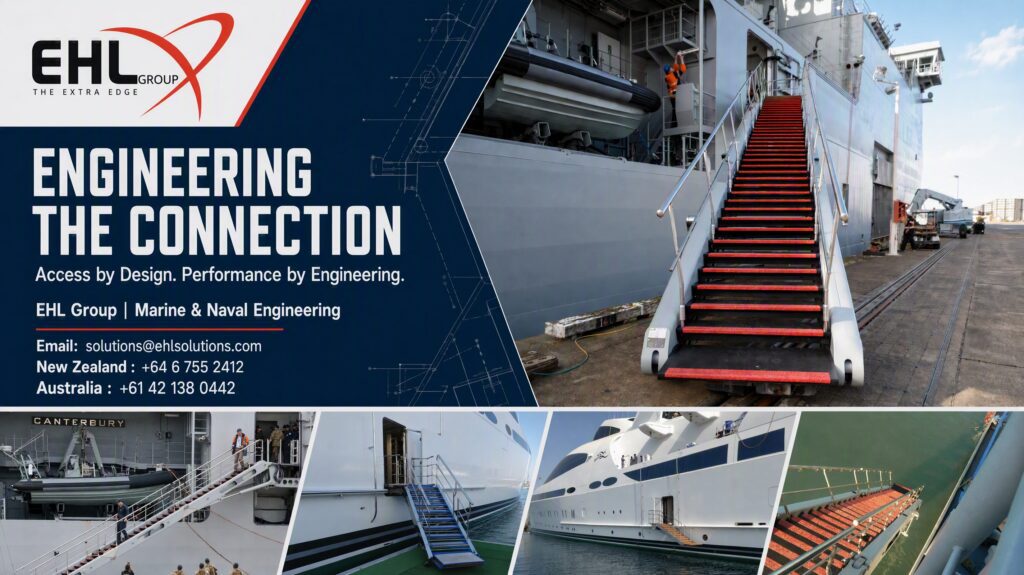
Introduction
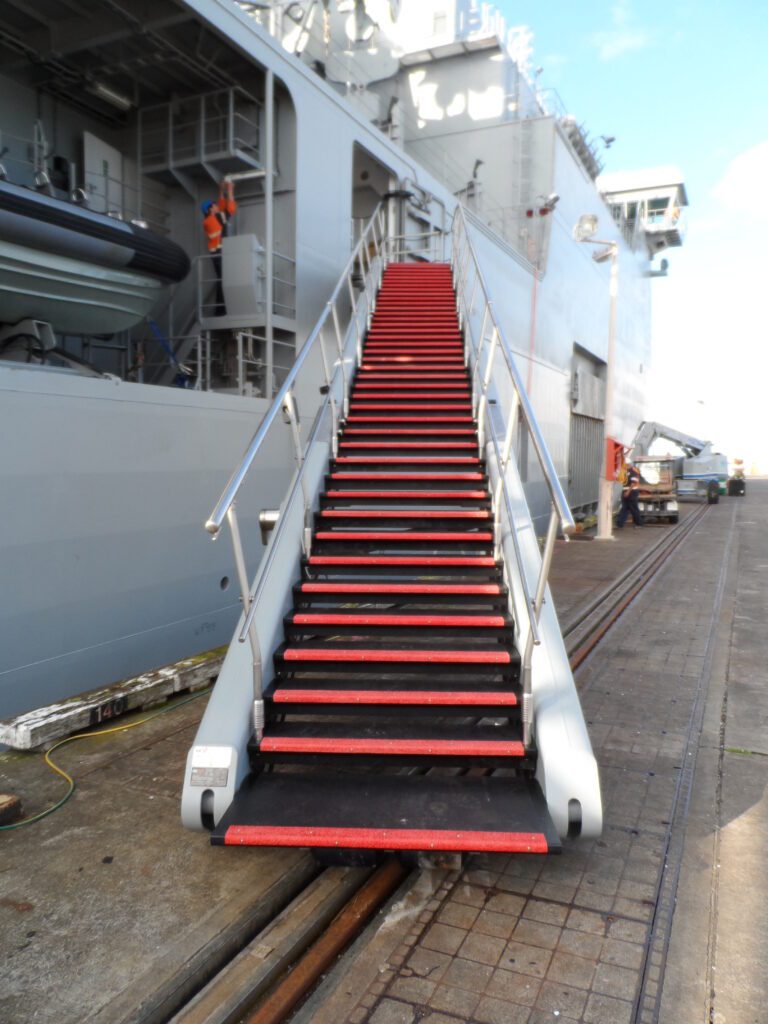
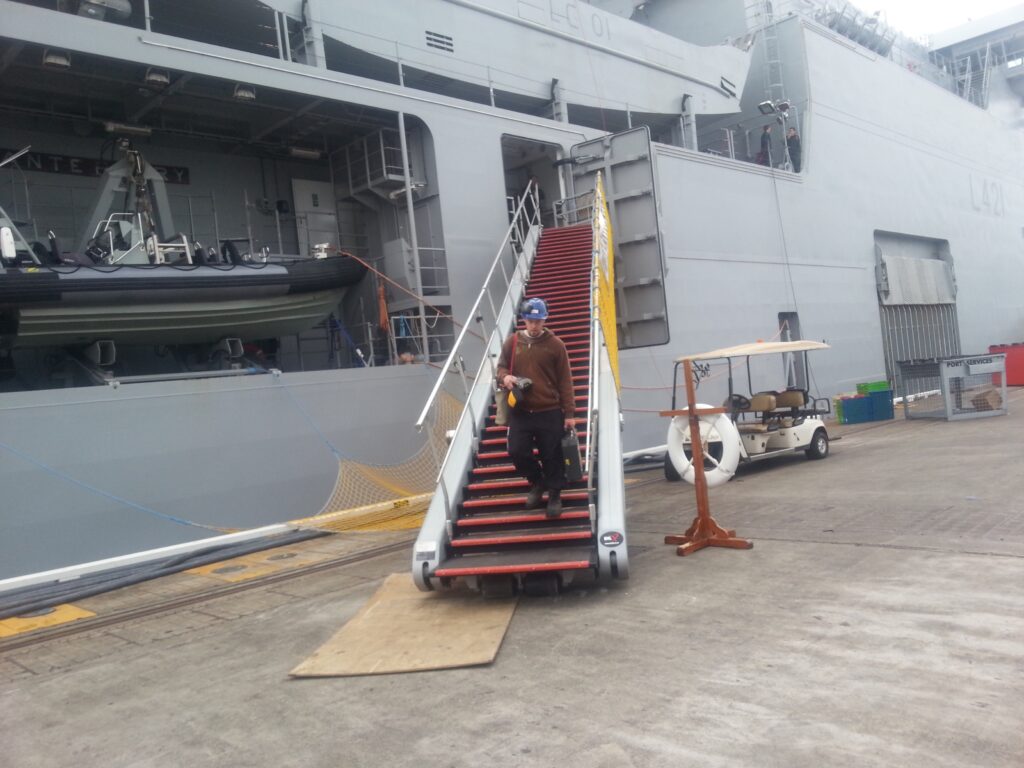
A marine gangway or accommodation ladder can appear deceptively simple. It extends from a vessel, provides a safe means of access and retracts when the operation is complete.
But the visible structure is only one part of a much more complex engineering system.
A properly designed marine access system must work within the vessel’s structural arrangement, available space, operational profile, power systems, control architecture, maintenance philosophy and safety requirements.
That is why the most important question is not:
“Which gangway should we buy?”
It is:
“What does this vessel actually need its access system to do?”
For naval vessels, commercial ships, offshore platforms, emergency-response vessels and specialised maritime craft, the answer can be very different.
Start With the Vessel — Not the Catalogue
A catalogue approach starts with an available product and attempts to make it fit.
Engineering starts somewhere else.
It begins with the vessel.
Before a gangway or accommodation ladder is specified, important questions need to be understood:
- Where will the system be located?
- What is the available stowage envelope?
- What is the required operating range?
- What are the expected vessel movements?
- How frequently will it be deployed?
- What loads must it accommodate?
- Who will operate it?
- How much crew intervention is acceptable?
- What happens during loss of hydraulic or electrical power?
- How will it be inspected and maintained?
- What structural interfaces are required?
- What class, statutory or project requirements apply?
These questions determine the engineering architecture.
Integration Is Where the Engineering Starts
A marine access system does not operate independently.
It can interface with:
- vessel structure
- hydraulic power systems
- electrical supplies
- PLC or control systems
- remote-control interfaces
- safety interlocks
- sensors
- emergency systems
- lighting
- handrails
- deck equipment
- doors and access openings
This means the gangway should be considered a shipboard system, rather than simply a fabricated item of equipment.
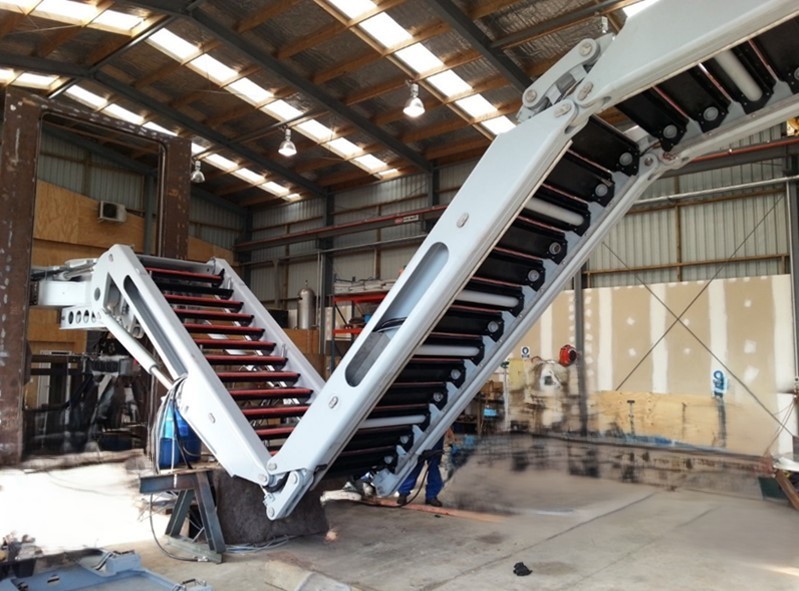
EHL’s maritime capability encompasses not only accommodation ladders and gangways but also hydraulic systems, HPUs, shell doors, electrical and control systems and remote-control systems.
That integrated capability is particularly important when designing a system for a new vessel or modifying an existing vessel.
Space Is an Engineering Parameter
One of the most overlooked aspects of access-system design is stowage.
A system may have excellent operating characteristics but still be unsuitable if it consumes too much internal or deck space.
Stowage requirements can affect:
- accommodation layouts
- machinery spaces
- access routes
- watertight boundaries
- deck loading
- maintenance access
- adjacent equipment
- structural reinforcement
The challenge is therefore not simply to create a gangway that reaches the required position.
It is to create one that reaches the required position while occupying an acceptable envelope throughout its entire operating cycle.
Automation Should Solve a Problem
Automation should not be specified simply because it sounds advanced.
The real question is:
What operational problem does automation solve?
Depending on the vessel, automation can reduce manual handling, simplify deployment, improve repeatability, reduce operator exposure and potentially allow fewer personnel to perform the operation.
EHL’s published marine systems include automated deployment, single-operator functionality and custom configurations for different vessel requirements.
But automation also introduces engineering considerations of its own.
The designer must consider:
- control logic
- sensor feedback
- interlocks
- emergency stops
- manual overrides
- hydraulic or electrical failure
- fault detection
- operator interfaces
- safe recovery
Automation therefore needs to be designed as part of the access system rather than added afterwards.
Designing Around Real Operating Conditions
A gangway rarely operates in a perfectly controlled environment.
Depending on the application, it may encounter:
- vessel movement
- tidal variation
- wind
- changing freeboard
- different landing positions
- repeated loading cycles
- wet or contaminated surfaces
- temperature variation
- saltwater exposure
A system designed only around a static geometry may perform very differently once subjected to real operational conditions.
Good marine engineering therefore considers the operating envelope rather than simply the nominal dimensions.
The Difference Between Equipment and Engineering
A manufactured gangway can satisfy a dimensional requirement.
An engineered access system should satisfy an operational requirement.
That distinction matters.
The engineering objective is not merely to produce a structure that can be installed on the vessel. It is to create an access system that can be safely deployed, operated, recovered, maintained and supported throughout its intended service life.
EHL’s approach spans concept engineering, design, fabrication, installation, testing, maintenance, inspection and upgrades.
That lifecycle perspective changes the design conversation.
A Better Question for Vessel Designers
Rather than asking:
“What gangway fits this vessel?”
consider asking:
“What access system best supports the vessel’s mission?”
That question encourages consideration of:
- operational requirements
- crew interaction
- vessel integration
- structural constraints
- stowage
- automation
- maintenance
- safety
- lifecycle support
And that is where engineering begins.
Conclusion
The best marine access system is not necessarily the largest, most automated or most complex system available.
It is the system that has been engineered around the vessel, its operating environment and its mission.
For EHL, that means treating the gangway or accommodation ladder as part of the vessel rather than as an isolated piece of equipment.
**The gangway isn’t the product.
The vessel is the starting point.**
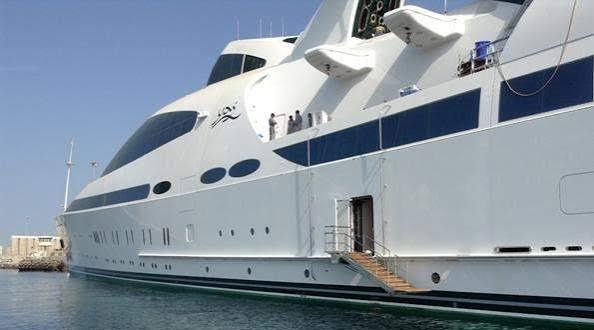
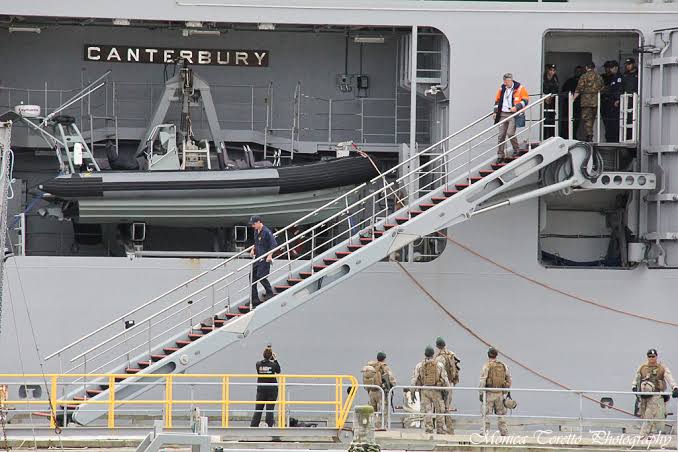
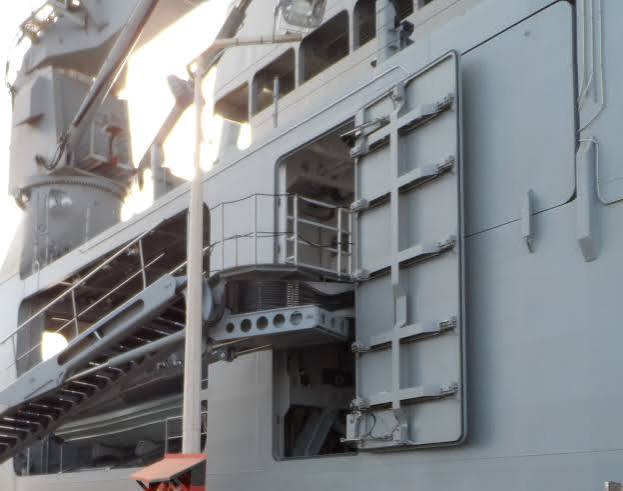
Frequently Asked Questions
What is marine gangway design?
Marine gangway design is the engineering process of developing a safe and functional access system around the vessel’s geometry, structure, operating environment and mission requirements. It can include structural design, hydraulic or electric actuation, controls, stowage, safety systems, operating envelopes, maintenance access and vessel integration.
Why should a marine gangway be designed around the vessel?
A vessel-specific approach ensures that the gangway fits the available structural, spatial and operational constraints. Factors such as deck space, freeboard, landing position, vessel movement, stowage envelope, load requirements and existing shipboard systems can all influence the final design.
What factors should be considered when specifying a marine accommodation ladder?
Important considerations include required length, working envelope, load capacity, stowage arrangement, vessel freeboard, landing conditions, operating frequency, actuation method, structural interfaces, materials, corrosion environment, control requirements, emergency operation and lifecycle maintenance.
What is the difference between a standard and customised marine gangway?
A standard gangway is generally based on predetermined dimensions and configurations. A customised marine gangway is engineered around the vessel’s specific operational, structural and spatial requirements. Custom engineering can be particularly important for naval vessels, specialised commercial vessels, offshore assets and retrofit projects.
Can a marine gangway be integrated with a vessel’s hydraulic and electrical systems?
Yes. Depending on the design, marine access systems can incorporate hydraulic power units, cylinders, valves, electrical controls, sensors, PLCs, remote controls and safety interlocks. The extent of integration should be established during the engineering phase.
Why is the stowed position important when designing a gangway?
The stowed position determines how much vessel space the system occupies and how it interacts with adjacent equipment, access routes, doors, machinery and maintenance areas. Both the deployed and stowed envelopes should therefore be considered during design.
Can EHL design marine gangways for naval and commercial vessels?
EHL Group designs and manufactures marine access systems for naval, commercial, offshore and specialised vessel applications, including automated and accommodation ladder systems. Its capability extends from engineering and fabrication through installation, inspection, maintenance and upgrades.